
Dr. Richard Matulewicz - Health-Releated Quality of Life in Testicular Cancer | Testicular Cancer Conference 2025 presented by Fennec Pharmaceuticals
Dr. Richard Matulewicz - Health-Releated Quality of Life in Testicular Cancer | Testicular Cancer Conference 2025 presented by Fennec Pharmaceuticals
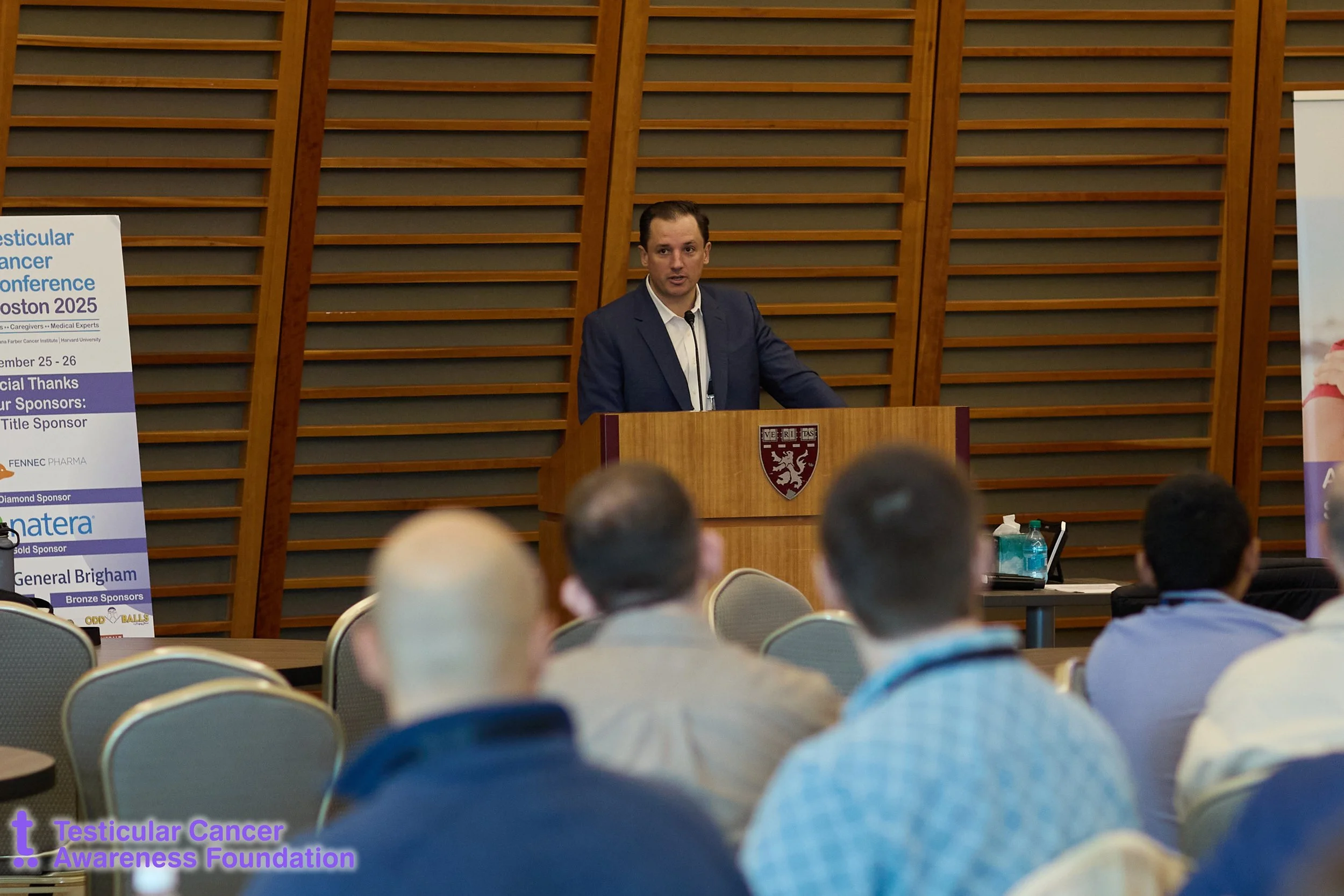
At the 2025 Testicular Cancer Conference, Dr. Richard Matulewicz delivered a deeply patient-focused presentation on health-related quality of life (HRQoL) and why it must be treated as a core outcome in testicular cancer care. Speaking to survivors, advocates, and clinicians, he emphasized that cure is only the beginning and how survivors live in the decades that follow matters just as much.
What Is Health-Related Quality of Life?
Dr. Matulewicz began by defining health-related quality of life as a multidimensional, patient-reported concept, not something that can be captured by scans or lab results alone.
Key points included:
HRQoL reflects how patients perceive their physical, emotional, and social well-being
It includes symptoms, limitations, daily functioning, and future outlook
Quality of life is inherently subjective and can only be reported by patients themselves
HRQoL complements traditional clinical outcomes and should inform care decisions
Why Quality of Life Is Often Missed in Cancer Care
Dr. Matulewicz highlighted a critical disconnect between what clinicians document and what patients experience.
Key takeaways:
Doctors tend to under-acknowledge symptoms
Patients often under-report challenges, wanting to appear “okay”
Studies show significant gaps between physician-reported and patient-reported side effects
Many survivorship issues go unrecognized, especially years after treatment
Without asking patients directly, these concerns are easily missed
The Power of Patient-Reported Outcomes
A major emphasis of the talk was the value of patient-reported outcomes (PROs) in improving care.
Dr. Matulewicz shared evidence showing that:
Regularly collecting PROs improves communication and symptom management
Patients who actively report symptoms during treatment have better overall survival
Asking patients how they are doing can be as impactful as many medical interventions
PROs should be actionable tools, not just data collected and ignored
Why This Matters Especially in Testicular Cancer
Testicular cancer presents a unique survivorship challenge due to the young age at diagnosis.
Key points included:
Median age at diagnosis is approximately 33 years
Survivors often have 40+ years of life ahead of them
Treatment effects can influence decades of physical, sexual, mental, and social health
Survivorship concerns include:
Fertility and sexual function
Mental health
Cardiovascular and pulmonary health
Physical function and body image
Long-term quality of life must be addressed early and revisited over time
Measuring What Matters: Quality of Life in Practice
Dr. Matulewicz emphasized a simple but critical truth:
You cannot improve what you do not measure.
He discussed efforts at Memorial Sloan Kettering to integrate HRQoL into routine care, including:
Standardized, validated surveys delivered across the entire care continuum
Assessment before treatment, during treatment, and throughout survivorship
A testicular cancer–specific questionnaire covering:
Treatment side effects
Physical health and body image
Sexual function and fertility
Future outlook
Relationships, work, and education
Longitudinal tracking to understand how quality of life changes over time
Improving Post-Surgical Recovery Through Patient Reporting
Dr. Matulewicz also described a post-surgical recovery tracking system designed to catch problems early.
Key features included:
Daily patient check-ins after surgery for up to 10 days
Monitoring symptoms such as pain, fever, and wound concerns
Automated alerts for moderate or severe symptoms
Two-way communication between patients and care teams
Early intervention to prevent complications and unnecessary hospitalizations
The Goal of Survivorship Care
Dr. Matulewicz closed with a powerful reminder of the responsibility shared by the medical community.
Key messages:
Patients consent to treatment to eliminate cancer but long-term effects often follow
Survivorship care must address both short- and long-term consequences of treatment
The goal is not just longer life, but better life
Quality of life should be protected from diagnosis through survivorship
His message resonated clearly: curing testicular cancer is a remarkable success—but ensuring survivors thrive for decades afterward is the work still ahead.