
Testicular cancer relapse surveillance
Natera’s Signatera™ Test: Personalized Surveillance for Early Testicular Cancer Relapse
Natera is a genetic testing company that specializes in using cell-free DNA (cfDNA) technology for oncology diagnostics across several cancers, including testicular cancer. They offer a personalized blood test called Signatera™, which analyzes circulating tumor DNA (ctDNA) to help detect a potential relapse earlier than traditional imaging.
On September 30th, 2025, the largest ctDNA study ever performed in testicular cancer was published, demonstrating that Signatera™ provided substantially higher sensitivity and earlier relapse detection compared to traditional tumor markers.
How Natera Helps Detect Early Testicular Cancer Relapse
The Natera’s Signatera™ Test provides highly sensitive and personalized monitoring for minimal residual disease (MRD), the trace amounts of cancer that may remain after initial treatment. This approach differs from traditional monitoring methods like imaging scans and standard tumor marker blood tests, which can sometimes miss small amounts of lingering cancer.
Here is how the process works:
Personalized Test Design:
A one-time analysis is performed on a sample of your tumor tissue (typically from a prior surgery) and a normal blood sample. Natera's technology compares these samples to identify a unique "fingerprint" of genetic mutations specific to your cancer.
2. ctDNA Monitoring:
Once your personalized test is built, subsequent monitoring only requires a routine blood draw. The Signatera™ Test then looks for these specific tumor DNA fragments (ctDNA) in your bloodstream.
3. Early Detection:
The test can detect the presence or absence of ctDNA, indicating the presence of MRD, much earlier than standard methods. Studies have shown that a positive Signatera™ Test can predict cancer recurrence months before it becomes visible on imaging scans, allowing for earlier intervention.
4. Informed Decisions:
The results help doctors decide if additional treatments, such as adjuvant chemotherapy, are necessary after surgery or to monitor how well current therapy is working. A positive result indicates a higher risk of recurrence, while a negative result suggests a lower likelihood of it.
By offering a sensitive, personalized monitoring tool, Signatera™ Test helps empower patients and their oncologists to make more informed and timely decisions about their care, potentially leading to better outcomes.
How is the personalized Signatera™ Test made?
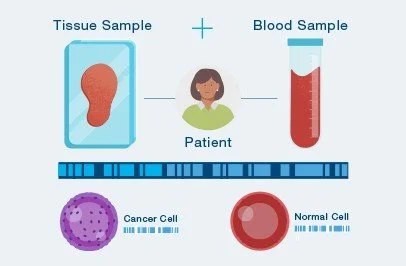
Step 1) A one-time analysis of both blood and tissue determines your unique set of tumor mutations.

Step 2) The MRD test is custom-built and personalized just for you, using your own tumor tissue.
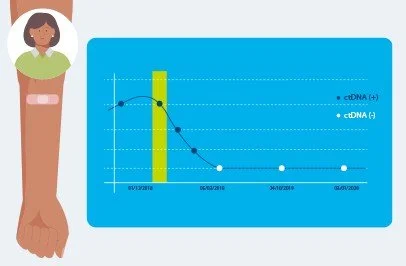
Step 3) Signatera™ MRD test detects small fragments of ctDNA each time it is ordered as part of your routine follow-up blood tests. Patients who are ctDNA positive by Signatera are more likely to relapse.
Early Relapse Detection: Backed by Science
A recent study “Longitudinal Evaluation of Circulating Tumor DNA as a Prognostic Biomarker to Detect Molecular Residual Disease in Germ Cell Tumors” - led by Dr. Rebecca Hassoun with contributions from Dr. Clint Cary, a Testicular Cancer Conference 2018 speaker and It Takes Balls podcast guest, was published in November 2025. The publication found that patients who tested positive with the Signatera™ Test - indicating early signs of relapse - were more likely to experience a return of their cancer sooner or have additional complications, both after surgery and during ongoing monitoring.
The research, published in JCO Precis Oncol, highlighted the limitations of current serum tumor markers (STMs) like alpha-fetoprotein (AFP) and human chorionic gonadotropin (hCG) in effectively managing GCTs due to normal or falsely elevated levels in some patients.
The study involved longitudinal ctDNA testing in 74 patients with GCTs using a tumor-informed approach. The results showed promising outcomes, where ctDNA-positive patients had significantly worse event-free survival (EFS) during MRD and surveillance windows compared to ctDNA-negative individuals. Notably, ctDNA analysis demonstrated a more distinct prognostic value than conventional STMs in predicting disease progression in various disease management settings.
“These findings demonstrate that ctDNA can identify which patients with testicular cancer are at high risk of recurrence or progression,” said Nabil Adra, M.D., associate professor of medicine at Indiana University and principal investigator of the study. “This study gives us new key evidence on the potential of ctDNA to meaningfully improve how we monitor and manage this disease.”
The findings suggest that ctDNA monitoring could revolutionize clinical decision-making in GCTs, potentially reducing unnecessary adjuvant chemotherapy and guiding treatment strategies more effectively. The research team plans larger prospective trials to establish the clinical utility of ctDNA further in managing GCTs.
The study signifies a breakthrough in utilizing ctDNA as a robust biomarker for MRD detection in GCT patients, offering a new avenue for personalized and precise treatment approaches. The researchers emphasize the need for future research to explore the full potential of ctDNA monitoring in enhancing GCT patient care.
To learn more, you can access additional resources and information on the Natera website.
Reference: Hassoun, R., Ben-David, R., Sfakianos, J. P., et al. (2025). Longitudinal Evaluation of Circulating Tumor DNA as a Prognostic Biomarker to Detect Molecular Residual Disease in Germ Cell Tumors. JCO Precis Oncol, 9:e2500176. https://tnyp.me/VpjXf72F