
Dr. Darren Feldman - History of Chemotherapy in Testicular Cancer | Testicular Cancer Conference 2025 presented by Fennec Pharmaceuticals
Dr. Darren Feldman - History of Chemotherapy in Testicular Cancer | Testicular Cancer Conference 2025 presented by Fennec Pharmaceuticals
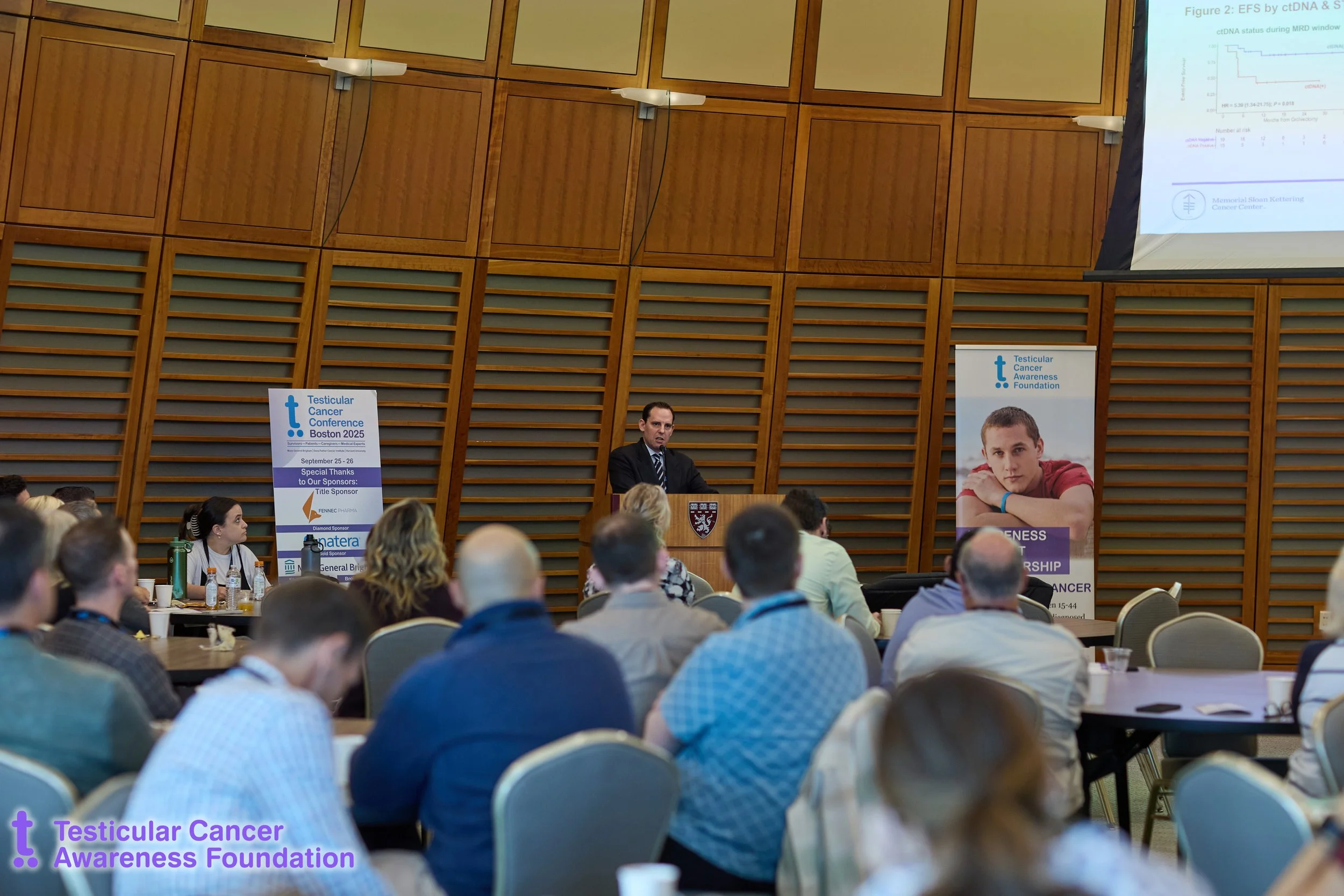
At the 2025 Testicular Cancer Conference, Dr. Darren Feldman of Memorial Sloan Kettering Cancer Center presented a comprehensive overview of how germ cell tumor care has evolved and where the field is headed next. His talk emphasized a consistent guiding principle in cancer care: maximizing treatment effectiveness while minimizing toxicity and long-term harm, particularly for a young patient population.
Where We’ve Been: The Impact of Cisplatin
Dr. Feldman began by reflecting on the history of testicular cancer treatment and the dramatic shift brought about by cisplatin-based chemotherapy. Key takeaways included:
Before cisplatin, metastatic testicular cancer was often fatal, with most patients not surviving
The introduction of cisplatin is considered one of the greatest medical advances of the 20th century
Survival rates for metastatic disease improved from roughly 20% to nearly 80%
While highly effective, cisplatin is associated with significant short- and long-term side effects, making toxicity reduction an ongoing priority
Why Collaboration Matters in a Rare Cancer
Because testicular cancer is rare, Dr. Feldman stressed that progress is only possible through collaboration across institutions and countries. He highlighted how shared efforts have led to meaningful advances, including:
Development of standardized international prognostic models for first- and second-line chemotherapy
Improved ability to:
Stratify patients by risk
Compare outcomes across studies
Tailor treatment intensity to disease severity
Increased survival rates for patients with advanced and high-risk germ cell tumors
The ability to conduct large clinical trials that no single institution could accomplish alone
Survivorship and Long-Term Quality of Life
Dr. Feldman emphasized that cure is no longer the only goal—long-term health and quality of life matter deeply for survivors. Through large survivorship studies, researchers are now better understanding the lasting effects of treatment, including:
Peripheral neuropathy
Cardiovascular disease
Cognitive changes and chronic pain
The cumulative burden of multiple health conditions over time
He also discussed how these insights are shaping future care models focused on survivorship, monitoring, and prevention.
Emerging Biomarkers and Personalized Care
Looking ahead, Dr. Feldman highlighted promising advances in biomarkers that may soon change how testicular cancer is monitored and treated, including:
MicroRNA testing, which can detect disease in a higher percentage of patients than traditional tumor markers
Circulating tumor DNA (ctDNA), which may:
Detect recurrence earlier
Reduce reliance on frequent imaging
Help determine who truly needs additional treatment
Potential to reduce both over-treatment and under-treatment across all stages of disease
Addressing the Greatest Unmet Need
One of the most urgent challenges Dr. Feldman identified is the lack of effective treatments for relapsed and refractory germ cell tumors. Although these cases are uncommon, they represent a disproportionate loss of life years due to the young age of diagnosis. Key points included:
No curative therapies currently exist after high-dose chemotherapy
Few new treatments have entered the clinic in more than two decades
Emerging targets and therapies are under investigation, including:
Targeted agents
Antibody-based therapies
Cellular therapies
Global initiatives and virtual tumor boards are helping expand access to expertise and clinical trials
Looking Forward
Dr. Feldman concluded with a message of cautious optimism and urgency. Progress in germ cell tumor care will require:
Continued international collaboration
Investment in biomarker-driven research
A stronger focus on survivorship and toxicity reduction
Innovation in therapies for patients with relapsed disease
His closing reminder resonated strongly with attendees: when collaboration replaces isolation, progress becomes possible.
Follow Dr. Feldman:
Dr. Darren Feldman’s LinkedIn
Twitter/X @drdarrenfeldman
Follow Memorial Sloan Kettering Cancer Center:
MSKCC LinkedIn
Twitter/X @MSKCancerCenter