
Beyond Survival | A Testicular Cancer Survivor’s Journey
After surviving stage 3 testicular cancer, multiple brain tumors, 5 brain surgeries, 2 autologous stem cell transplants, and a stroke, Steve Tellefsen now volunteers in a chemotherapy unit, offering understanding and support to patients facing cancer treatment.
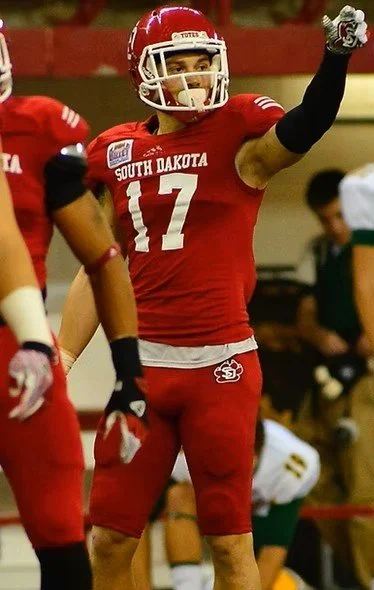
Calling the signals at the University of South Dakota
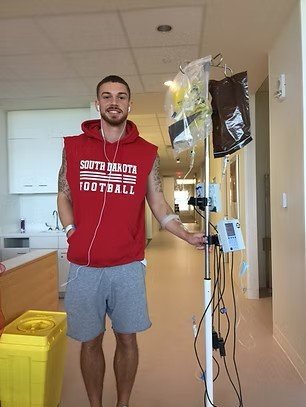
First day of chemotherapy
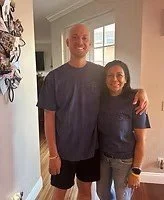
Steve with his biggest cheerleader - His mom
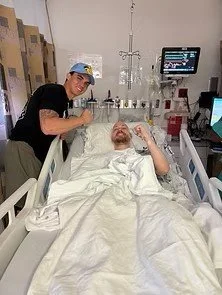
After Steve’s 5th brain surgery - To remove a cyst
When Steve Tellefsen was diagnosed with stage 3 testicular cancer in November 2017, his life changed in an instant. The news rocked Steve’s world - but he soon shifted his perspective from “Why me?” to “What now?” - choosing instead to focus on what needed to be done to win this fight of a lifetime.
Just a few years earlier, Steve had been competing at the highest levels of athletics. He played college football at the University of South Dakota and was even invited to rookie camp for the Minnesota Vikings in May 2015.
That same determination would later shape how he faced cancer and how he chose to give back.
Steve began chemotherapy at Memorial Healthcare Systems (MHS) in December 2017, followed by a Retroperitoneal Lymph Node Dissection (RPLND) in April 2018. After the 14-hour procedure to remove remaining tumor tissue, he was told he was cancer-free.
His journey, however, was far from over.
Only weeks later, Steve experienced numbness down his right arm. Imaging revealed a tumor in his brain, requiring emergency surgery. In the months that followed, he underwent multiple brain surgeries, experienced seizures, and suffered a hemorrhagic stroke that left him paralyzed on his right side and unable to speak.
His treatment expanded to include high-dose chemotherapy, radiation, and intensive rehabilitation, requiring care across multiple specialties, including oncology, neurology, and cardiology. One doctor later noted that almost every medical expert in MHS knew Steve, as he had been treated across so many disciplines.
After making progress in therapy, a third brain tumor appeared later that year, leading to another emergency craniotomy. When chemotherapy stopped working, Steve’s medical team developed a last-resort plan: full-brain radiation followed by a tandem autologous stem cell transplant.
An autologous stem cell transplant uses a patient’s own healthy blood-forming stem cells, which are collected in advance and stored. After high-dose chemotherapy and radiation destroy cancer cells - but also severely damage the bone marrow and immune system - the stored stem cells are returned to the body to help restore blood production and immune function. Because the cells come from the patient, there is no risk of rejection, allowing for the most aggressive treatment possible followed by a path to recovery.
The process required months-long hospital stays and extremely intensive chemotherapy that temporarily eliminated Steve’s immune system before his stem cells were reintroduced.
Steve completed his second stem cell transplant in August 2019. He also survived a stroke during this period of treatment. Since then, he has remained cancer-free.
Reflecting on his journey, Steve has shared that surviving cancer gave him a second chance at life. Today, he approaches each day with intention, focusing on what matters most and giving his all to the present.
That perspective is what led Steve back into hospital rooms, this time on the other side of treatment.
He now volunteers at Memorial Healthcare’s chemotherapy unit, visiting patients who are actively in treatment and offering something only a fellow survivor can provide: understanding, honesty, and presence. He is not there as a clinician or counselor. He is there as someone who has sat in the same chairs, faced the same uncertainty, and lived through the physical and emotional toll of cancer treatment. Sometimes that means listening. Sometimes it means encouragement. Sometimes it simply means being there.
Steve’s impact has extended well beyond hospital walls. On December 5, 2021, Brandon Linder (#65) of the Jacksonville Jaguars wore custom cleats as part of the NFL’s My Cause, My Cleats program in honor of #TellyStrong and the Testicular Cancer Awareness Foundation. The cleats brought national attention to testicular cancer awareness and reflected the movement Steve built around survivorship, resilience, and showing up for others.
Steve often credits his survival to the medical teams, his family, particularly his mom, and the community that never gave up on him. Today, he is part of that same support system for others, showing what survivorship can look like long after treatment ends.
“I’ve been through a lot,” Steve says. “But my heart is still beating. I’m just focusing on the now.”
Connect with Steve:
Instagram: /telly__tell1710/
Follow Memorial Healthcare System on Instagram: /mhshospital
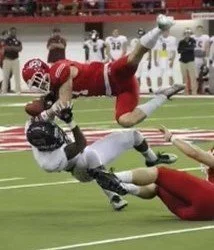
Letting it loose!
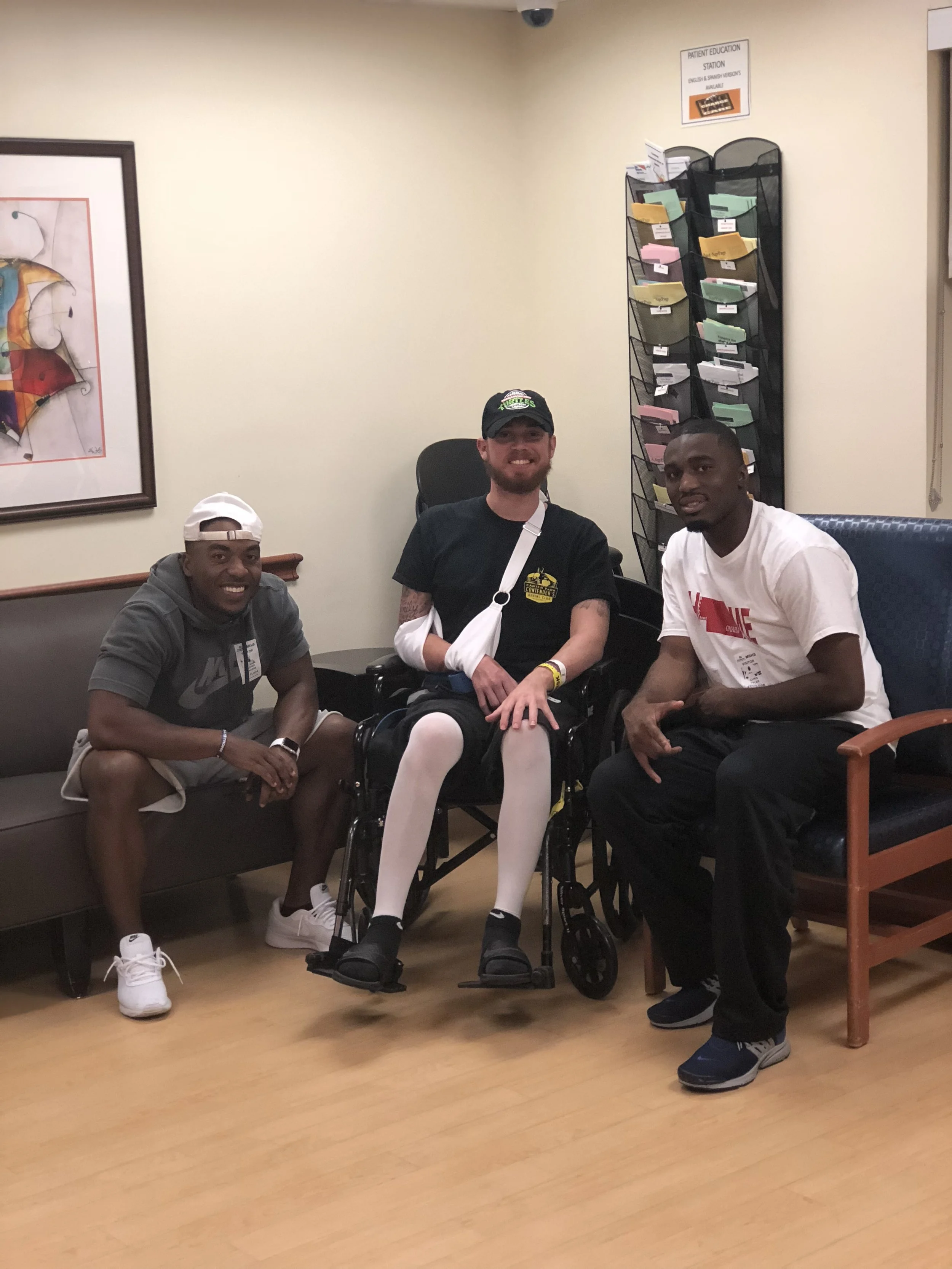
Spending time with friends
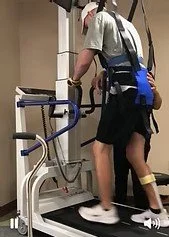
Physical therapy after a stroke, at Memorial South
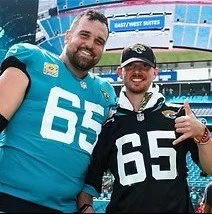
Jacksonville Jaguar #65, Brandon Linder, and close friend of Steve’s