
Testicular Cancer Blogs & Podcasts
Awareness .. Support .. Survivorship
Talking about testicular cancer and providing support and information for our community. Read featured posts or listen to our podcast, “It Takes Balls.”
Blog Posts

During Testicular Cancer Awareness Month, NADS Organic Underwear partnered with Testicular Cancer Awareness Foundation, to bring the “Check Your Nads” March to the streets of Austin. The bold six-mile march turned heads and brought survivors, supporters, and advocates together to raise awareness and start conversations.
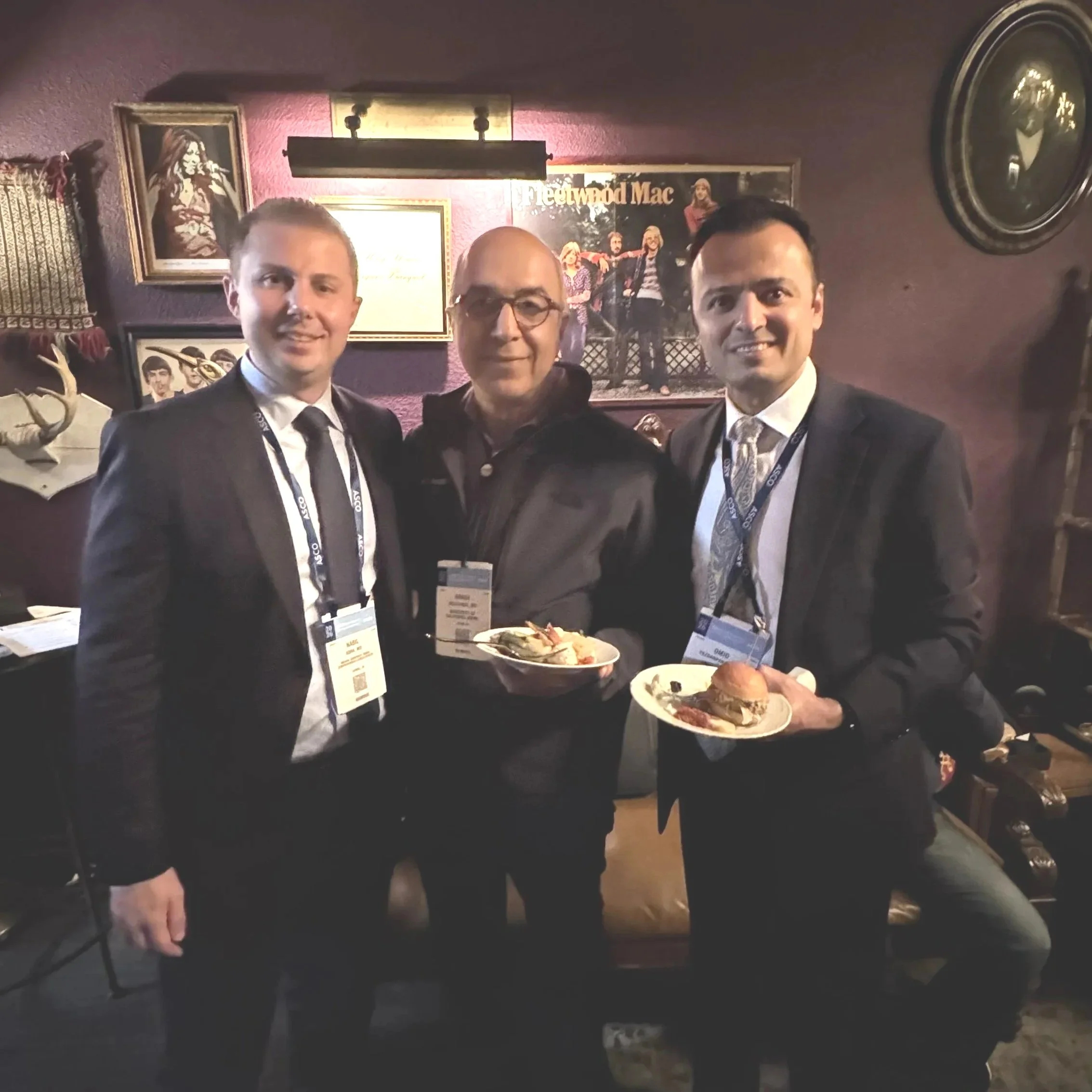
During the 2026 ASCO Genitourinary Cancers Symposium, the Testicular Cancer Awareness Foundation hosted 55 physicians and researchers at Marianne’s speakeasy in San Francisco for a Meet & Greet Social sponsored by Fennec Pharmaceuticals.

On April 27, 2025, Testicular Cancer Awareness Foundation (TCAF) hosted a Meet & Greet at the WAKUDA within the Palazzo at the Venetian in Las Vegas. The event was sponsored by Fennec Pharmaceuticals and took place during AUA 2025 Las Vegas, attracting over 50 attendees, including leading urologic oncologists and researchers in the field of testicular cancer.

Dr. Gamblin conquered the World Marathon Challenge, completing 5 full marathons and 2 half-marathons in under 6 days!
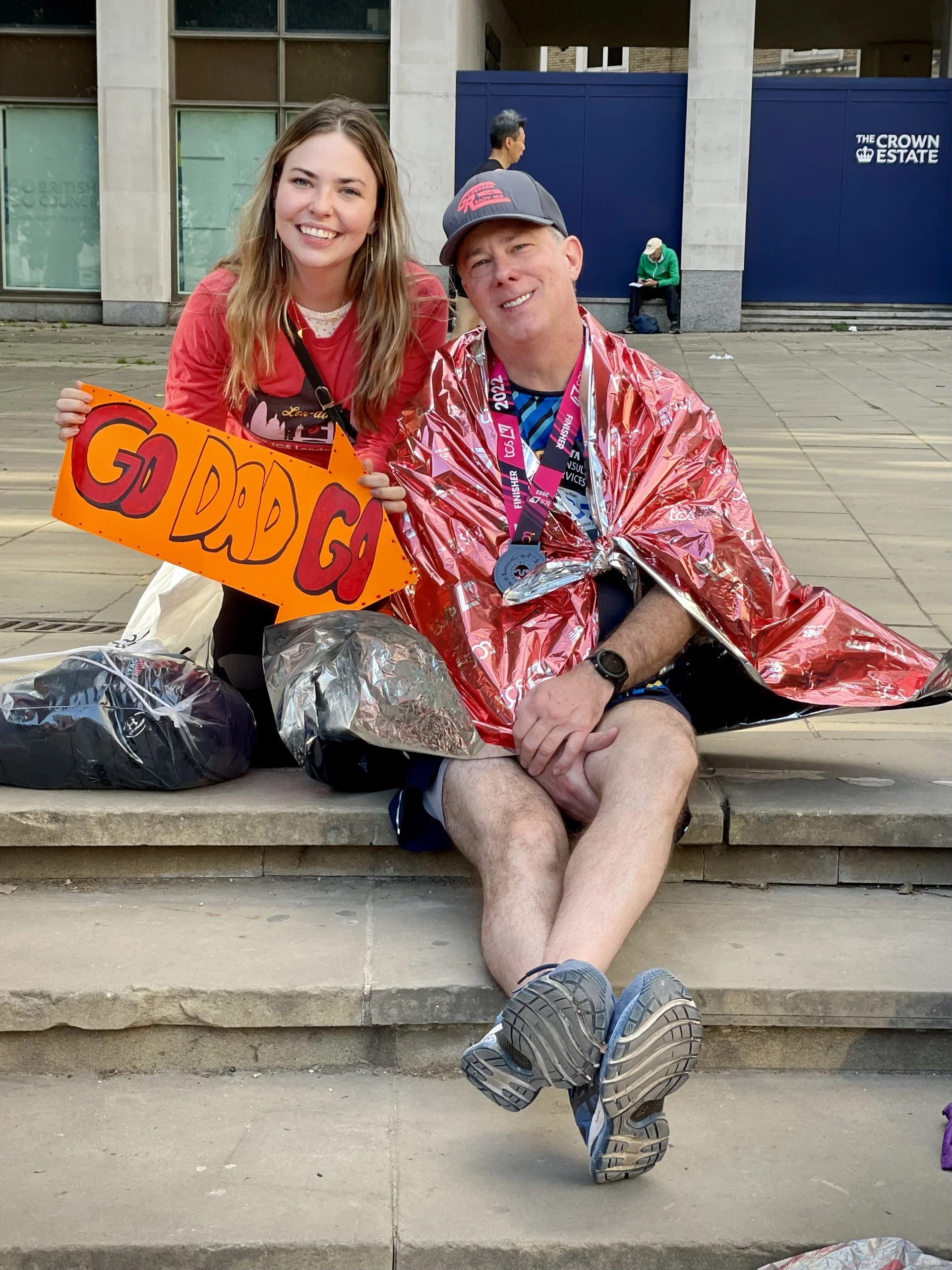
Dr. Gamblin aims to inspire others while raising funds for the Testicular Cancer Awareness Foundation by completing 7 marathons in 7 days across 7 continents.

April is Testicular Cancer Awareness Month! Thank you to Boston Marathon athletes who have chosen to support Testicular Cancer Awareness during this April’s race.

Rich Nuts is proud to partner with the Testicular Cancer Foundation this month to raise awareness and funds for this important cause. During the month of April 10% of every sale will be donated directly to TCAF.

Los Dos Portillos is supporting Testicular Cancer Awareness Month for the 2nd year in a row. 50% of all proceeds of Mexican Lager crowlers will be donated to Testicular Cancer Awareness Foundation.

The Testicular Cancer Awareness Foundation is proud to announce their partnership with Cardi B’s WHIPSHOTS and BUZZBALLS. For every video posted on social media utilizing WHIPSHOTS and BUZZBALLZ they will donate funds to the Testicular Cancer Awareness Foundation.

Join the New York Yankee’s and Testicular Cancer Awareness Foundation for a celebration of Men’s Health. Purchase tickets to one of four games this June and give back to Testicular Cancer Awareness. Follow our link for details and receive a free hat with your purchase!

Ben and Molly are a young couple living together in their 20s, thrown suddenly into disarray when Ben is diagnosed with testicular cancer. As a form of coping, Molly, an amateur documentarian, decides to make a documentary chronicling the experience, specifically the three days leading up to Ben’s left testicle removal, and the surgery day itself.
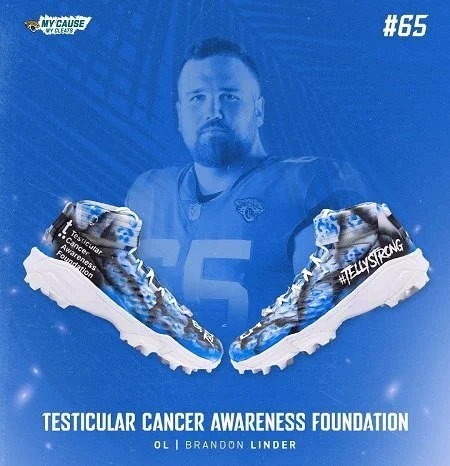
NATIONAL FOOTBALL LEAGUE SUPPORTS TESTICULAR CANCER AWARENESS FOUNDATION
Jacksonville Jaguars and #65 Brandon Linder - “I am honored to represent my best friend, Steve “Telly” Tellefsen and raise awareness for Testicular Cancer Awareness Foundation. I play this great game to honor him, and I look forward to helping raise awareness for this disease.”

James Gray Has officially completed day 30 on his journey of #bikingforballs and has made it to Wytheville, Virginia. James crossed into his final state of Virginia and is well on his way to the coast!

James Gray is a 20 year old university student studying at Newcastle University, England. On May 28th, James will be taking on a grueling challenge where he’ll be cycling from one side of the States to the other, covering a distance of over 3,800 miles across 10 States, in just 40 days!

This promotion with Deadpool and Ryan Reynolds was really amazing. While it’s a very serious topic, it makes sense to use humor because that’s how the message gets across to men. I formed the Testicular Cancer Awareness Foundation in 2009 as a way to educate people. My son was diagnosed with an aggressive form of testicular cancer at age 13.


In this post, we're going to lead off the series on treatment side-effects with a look at chemo induced peripheral neuropathy (CIPN).

Take a look at the word cloud above. These words, all of them, spoken by people who have faced testicular cancer, used to describe what their experience was like. Take a moment to go through them and see how many you can identify. Chances are people who have faced cancer of any kind can relate to a lot of those words.

There is a lot of information thrown at new patients when they are diagnosed with testicular cancer. Aside from the emotional toll that a diagnosis can take, there is understanding surgeries, treatments, appointments, and more. Even though it can be a lot to take in, comprehend, and process, there are still things that a lot of oncologists don't discuss about treatment for testicular cancer. One of the more pressing issues a man can end up facing after treatment is low testosterone. Too often, it is not discussed by the doctors, and many men face the challenges that can be presented by "Low T".
it takes balls podcast

This conversation is packed with practical, actionable guidance. Dr. Swartz explains why every patient should get a baseline audiogram before starting treatment (tested out to 20,000 Hz, not the standard 8,000) and a follow-up 6–8 weeks after finishing, how to protect the hearing you have from added noise damage, and how far modern hearing aids have come — now rechargeable, Bluetooth-enabled, and self-adjusting thousands of times per second. She also covers cochlear implants, listening strategies (sound bars, closed captioning, choosing the restaurant booth), and how partners and family can become better communicators.
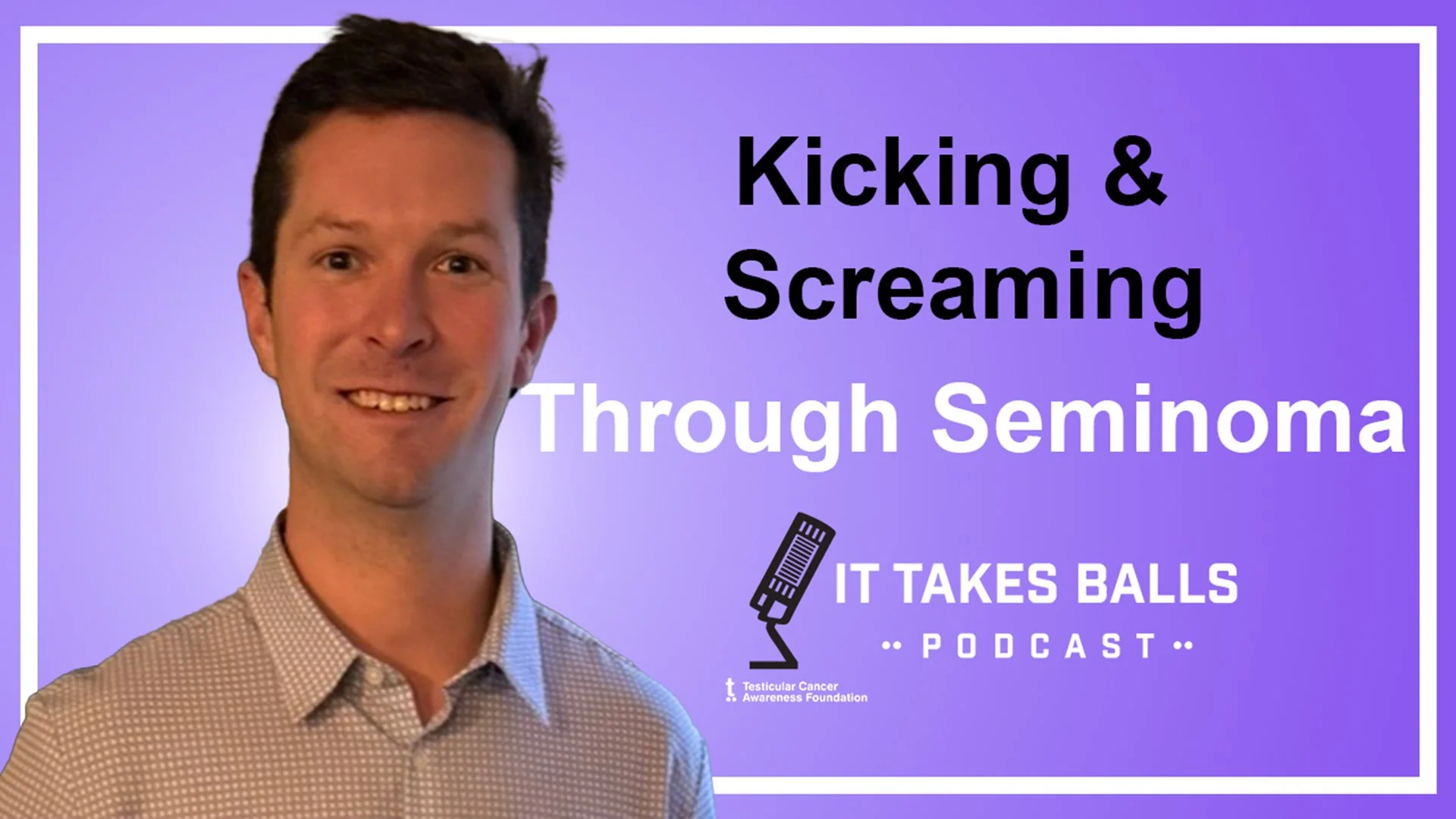
Faced with several paths — BEP chemotherapy, carboplatin plus radiation, or a robotic RPLND — Bray walks through one of the most difficult decisions of his life. He explains why he had concerns about the long-term risks of chemo and radiation, and chose a robotic retroperitoneal lymph node dissection Penn. Of the 15 lymph nodes removed, five contained cancer — more than expected, but still low-volume, with no adjuvant therapy needed and roughly an 80% chance of staying recurrence-free at two years.
At just 24, personal trainer Andrejs Lejietis was building a business and living what he thought was a healthy, active life in Stockholm, Sweden — until a strange abdominal pain that kept returning after lunch led to one of the most confusing diagnoses in testicular cancer. In this episode of It Takes Balls, our first-ever Swedish guest shares a remarkable story about an extragonadal germ cell tumor: testicular cancer with no primary tumor in the testicles at all.
David doesn't hold back about the gaps in his care, from "factory"-like bedside manner to Googling his way to a nearby cancer center and an experienced surgeon he'd never been told about. His post-chemo RPLND removed 21 lymph nodes (all negative) but left him navigating a brutal recovery that nearly broke him.
Despite enduring more treatment than most typical testicular cancer survivors, Taylor continues fighting with remarkable optimism while managing an active brain tumor and ongoing surveillance.

The conversation also dives into one of the most debated topics in testicular cancer today: the future of surveillance. Dr. Heidenreich discusses emerging blood tests that could reshape how recurrence is detected and monitored, offering his perspective. Rather than accepting the latest technology at face value, he explains why some innovations may hold more promise than others and what that could mean for the future of testicular cancer care.
After undergoing an orchiectomy, Nate learned he had 100% embryonal carcinoma, the same aggressive type of testicular cancer that affected Lance Armstrong. As a new father, he suddenly found himself navigating sperm banking, treatment decisions, and the uncertainty that comes with a cancer diagnosis.

Tony was on paternity leave when he developed a persistent ache in his lower abdomen. There was no lump, no testicular pain, and no obvious signs of testicular cancer, just a nagging discomfort that refused to go away.
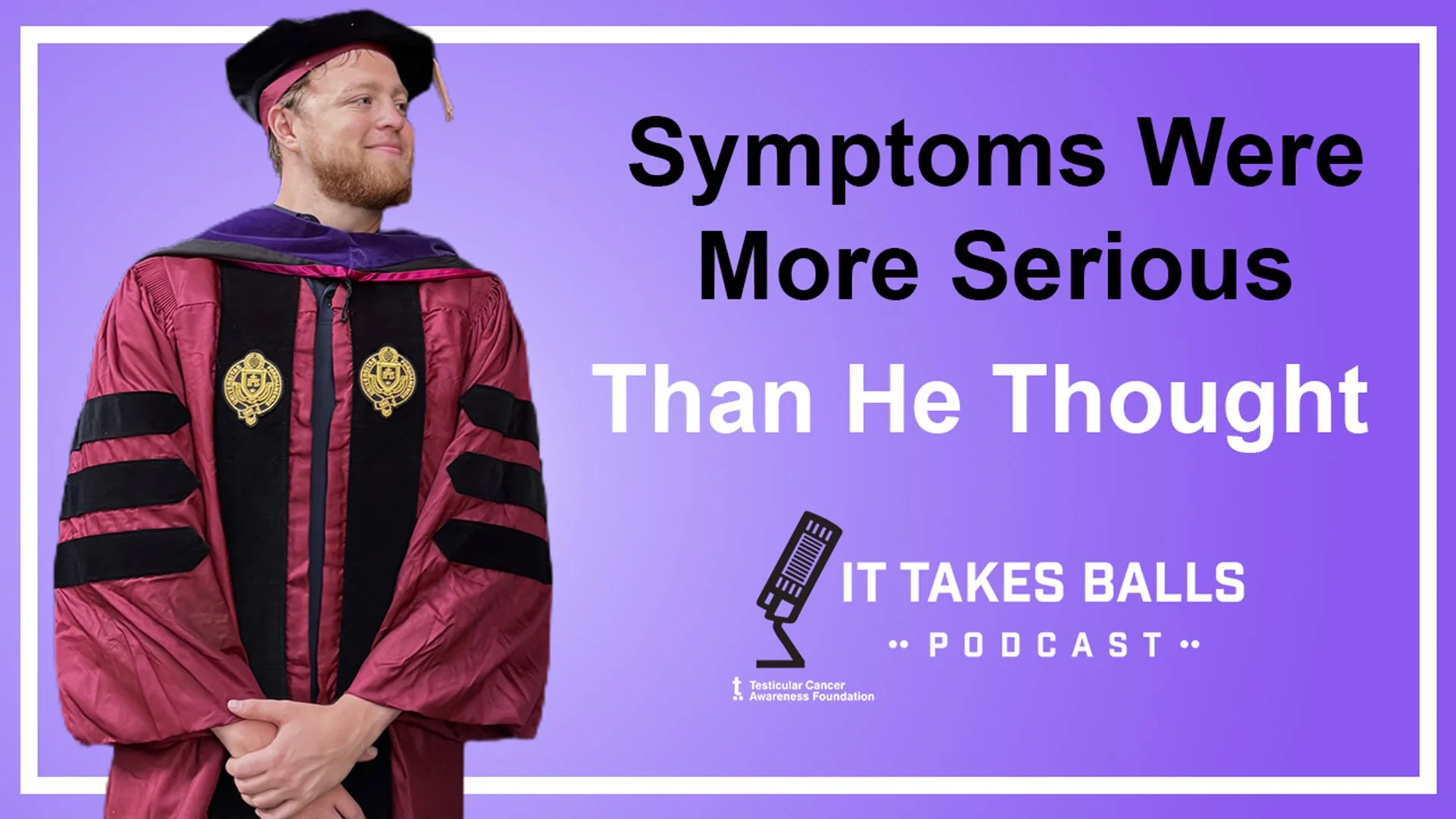
Jack opens up about navigating cancer largely on his own, with family hundreds of miles away in Wisconsin (visiting after surgery) and friends helping him through recovery in New York. He shares the emotional moment when the reality of being a cancer survivor finally hit him—days after surgery, alone in a friend's apartment, when weeks of fear, uncertainty, and stress came pouring out all at once.
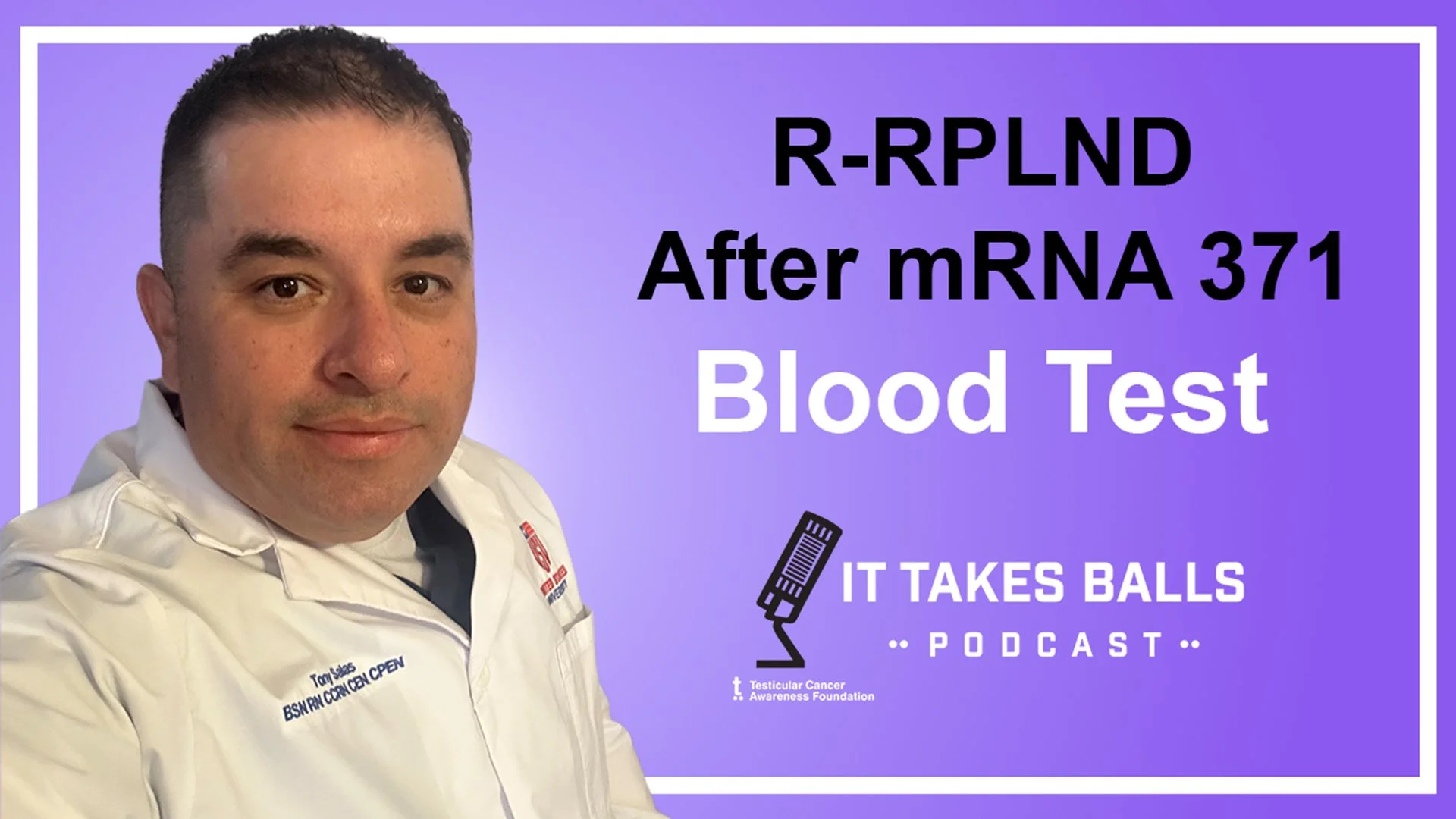
Tony discusses using MicroRNA 371, an emerging blood test showing major promise in detecting active germ cell tumors, along with Signatera, a personalized circulating tumor DNA (ctDNA) test designed to monitor for residual disease and recurrence. He shares what it was like balancing traditional surveillance methods like CT scans and tumor markers with these newer technologies, and how the uncertainty of recurrence can weigh heavily on survivors mentally and emotionally.
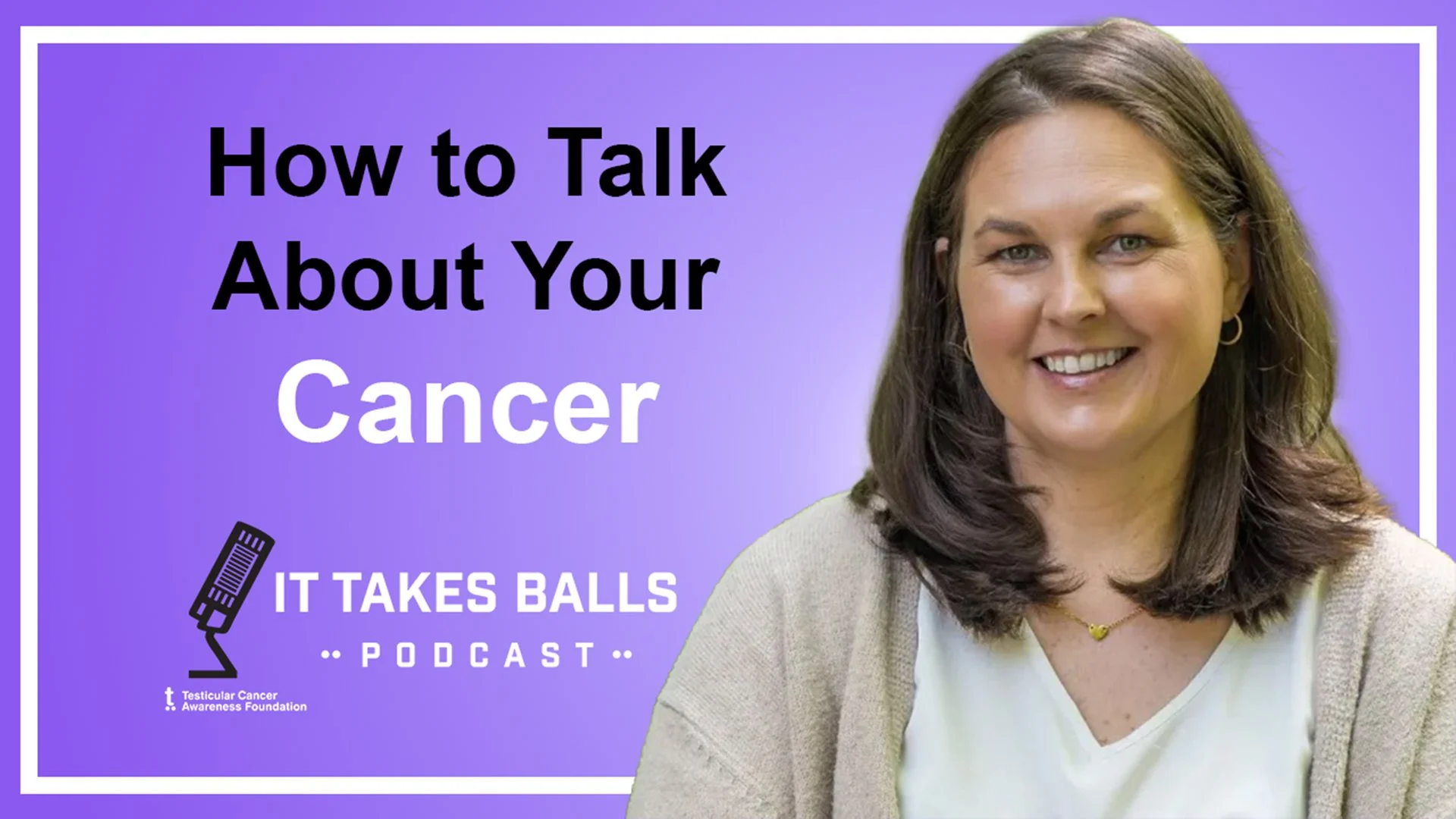
Drawing from her professional experience as an LMFT, Renee explains how cancer affects far more than physical health. The conversation explores the fear, uncertainty, anxiety, and identity shifts that often follow a diagnosis, especially for men who may feel pressure to stay strong or avoid emotional vulnerability. She also shares practical insight into how couples can communicate more effectively during treatment and recovery, even when both partners are struggling in different ways.
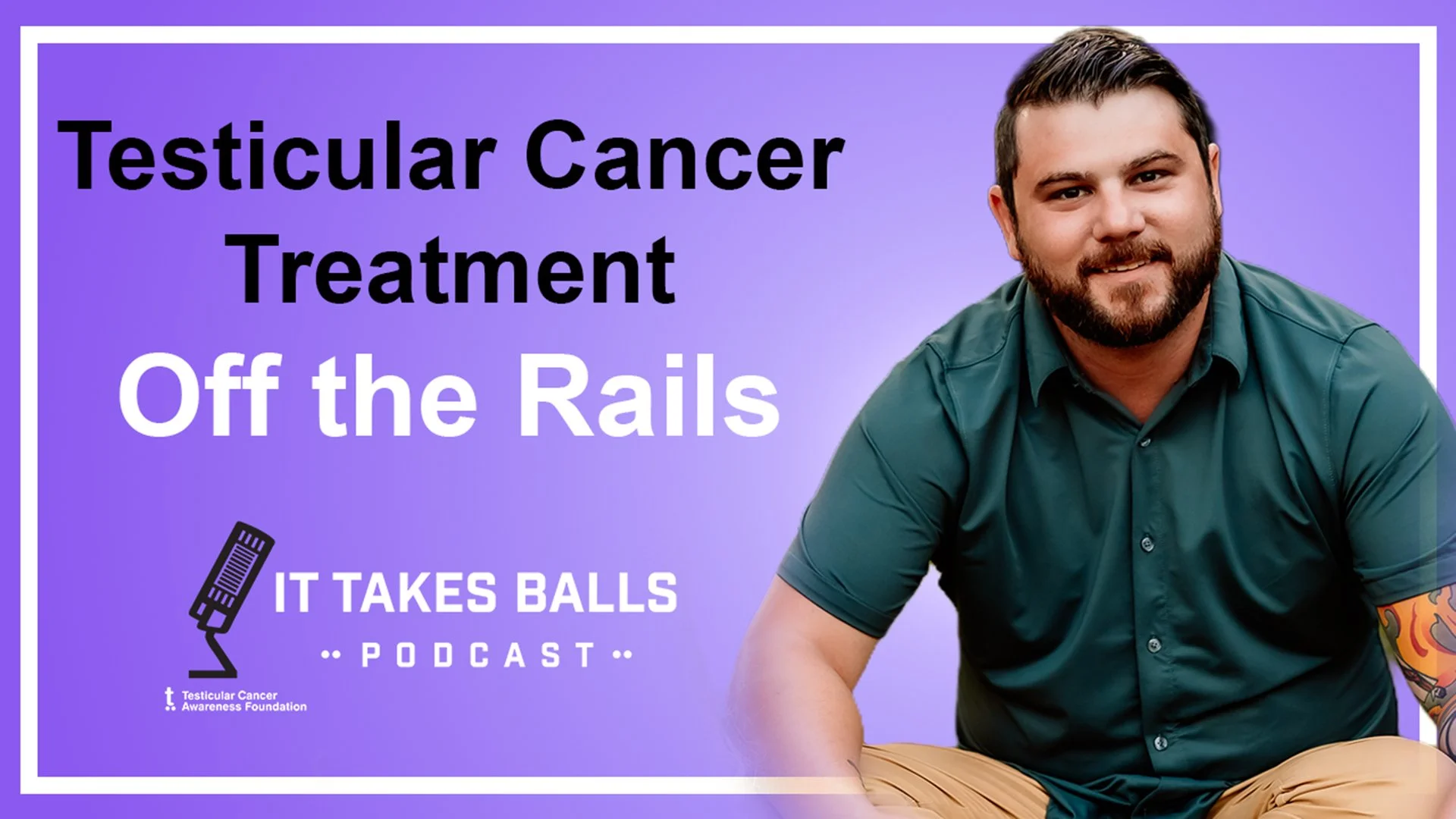
Dylan began treatment for a non-seminoma germ cell tumor with EP chemotherapy, but midway through, his condition took a devastating turn. What started as standard cancer treatment escalated into severe complications, including sepsis and gangrene, leaving him hospitalized in critical condition. At one point, his family was called in to say goodbye.
Blogs by Date
This conversation is packed with practical, actionable guidance. Dr. Swartz explains why every patient should get a baseline audiogram before starting treatment (tested out to 20,000 Hz, not the standard 8,000) and a follow-up 6–8 weeks after finishing, how to protect the hearing you have from added noise damage, and how far modern hearing aids have come — now rechargeable, Bluetooth-enabled, and self-adjusting thousands of times per second. She also covers cochlear implants, listening strategies (sound bars, closed captioning, choosing the restaurant booth), and how partners and family can become better communicators.
Faced with several paths — BEP chemotherapy, carboplatin plus radiation, or a robotic RPLND — Bray walks through one of the most difficult decisions of his life. He explains why he had concerns about the long-term risks of chemo and radiation, and chose a robotic retroperitoneal lymph node dissection Penn. Of the 15 lymph nodes removed, five contained cancer — more than expected, but still low-volume, with no adjuvant therapy needed and roughly an 80% chance of staying recurrence-free at two years.
At just 24, personal trainer Andrejs Lejietis was building a business and living what he thought was a healthy, active life in Stockholm, Sweden — until a strange abdominal pain that kept returning after lunch led to one of the most confusing diagnoses in testicular cancer. In this episode of It Takes Balls, our first-ever Swedish guest shares a remarkable story about an extragonadal germ cell tumor: testicular cancer with no primary tumor in the testicles at all.
David doesn't hold back about the gaps in his care, from "factory"-like bedside manner to Googling his way to a nearby cancer center and an experienced surgeon he'd never been told about. His post-chemo RPLND removed 21 lymph nodes (all negative) but left him navigating a brutal recovery that nearly broke him.
Despite enduring more treatment than most typical testicular cancer survivors, Taylor continues fighting with remarkable optimism while managing an active brain tumor and ongoing surveillance.
The conversation also dives into one of the most debated topics in testicular cancer today: the future of surveillance. Dr. Heidenreich discusses emerging blood tests that could reshape how recurrence is detected and monitored, offering his perspective. Rather than accepting the latest technology at face value, he explains why some innovations may hold more promise than others and what that could mean for the future of testicular cancer care.
After undergoing an orchiectomy, Nate learned he had 100% embryonal carcinoma, the same aggressive type of testicular cancer that affected Lance Armstrong. As a new father, he suddenly found himself navigating sperm banking, treatment decisions, and the uncertainty that comes with a cancer diagnosis.
Tony was on paternity leave when he developed a persistent ache in his lower abdomen. There was no lump, no testicular pain, and no obvious signs of testicular cancer, just a nagging discomfort that refused to go away.
Jack opens up about navigating cancer largely on his own, with family hundreds of miles away in Wisconsin (visiting after surgery) and friends helping him through recovery in New York. He shares the emotional moment when the reality of being a cancer survivor finally hit him—days after surgery, alone in a friend's apartment, when weeks of fear, uncertainty, and stress came pouring out all at once.
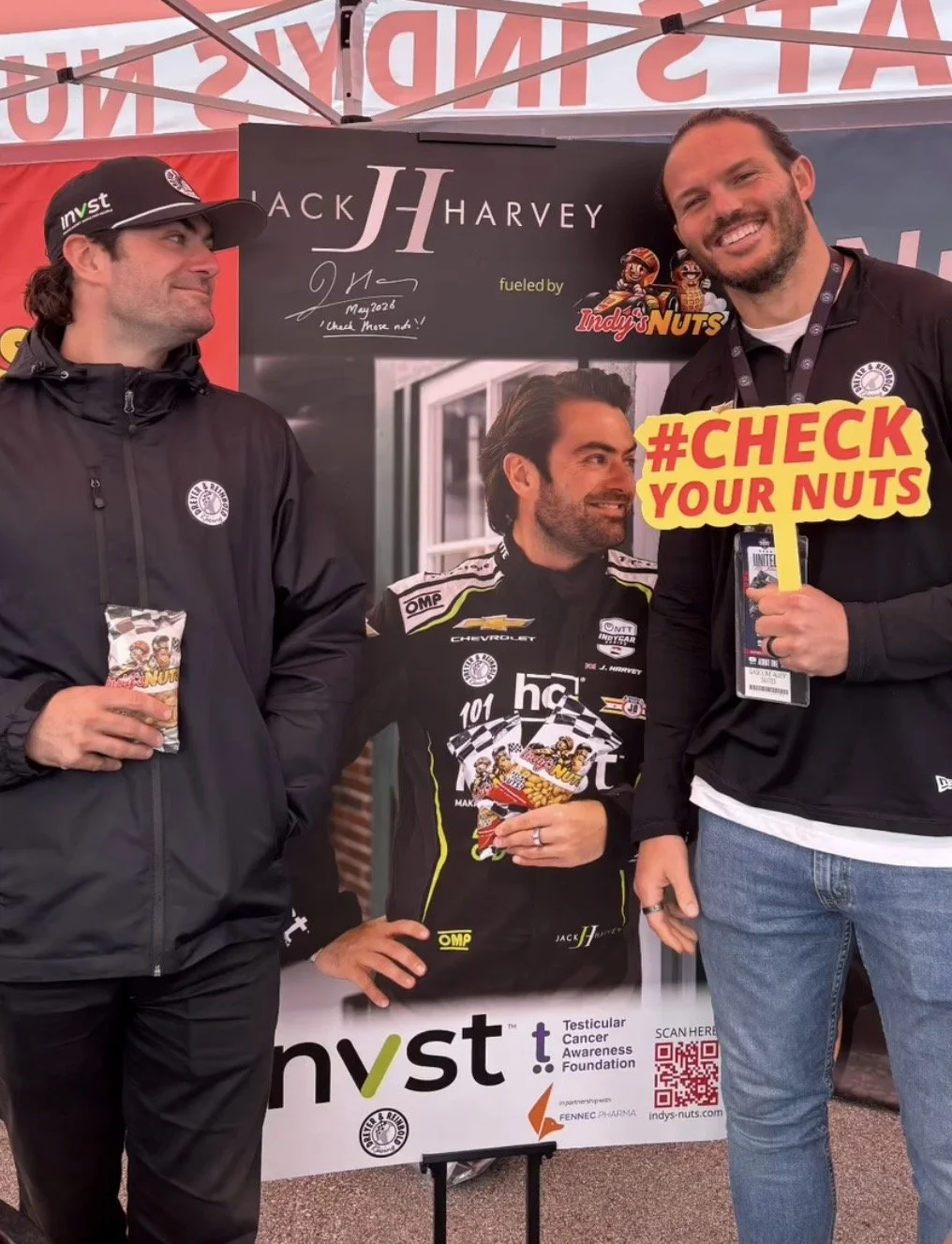
For three weeks leading up to the Indy 500, Testicular Cancer Awareness Foundation and Fennec Pharmaceuticals brought the Indy’s Nuts campaign to Indianapolis Motor Speedway. Through partnerships with Alex Singleton, Jack Harvey, INVST, and Dreyer & Reinbold Racing, the campaign sparked conversations about testicular cancer, early detection, hearing loss caused by chemotherapy, and life after cancer while reaching thousands of race fans throughout race month.
Tony discusses using MicroRNA 371, an emerging blood test showing major promise in detecting active germ cell tumors, along with Signatera, a personalized circulating tumor DNA (ctDNA) test designed to monitor for residual disease and recurrence. He shares what it was like balancing traditional surveillance methods like CT scans and tumor markers with these newer technologies, and how the uncertainty of recurrence can weigh heavily on survivors mentally and emotionally.
Drawing from her professional experience as an LMFT, Renee explains how cancer affects far more than physical health. The conversation explores the fear, uncertainty, anxiety, and identity shifts that often follow a diagnosis, especially for men who may feel pressure to stay strong or avoid emotional vulnerability. She also shares practical insight into how couples can communicate more effectively during treatment and recovery, even when both partners are struggling in different ways.
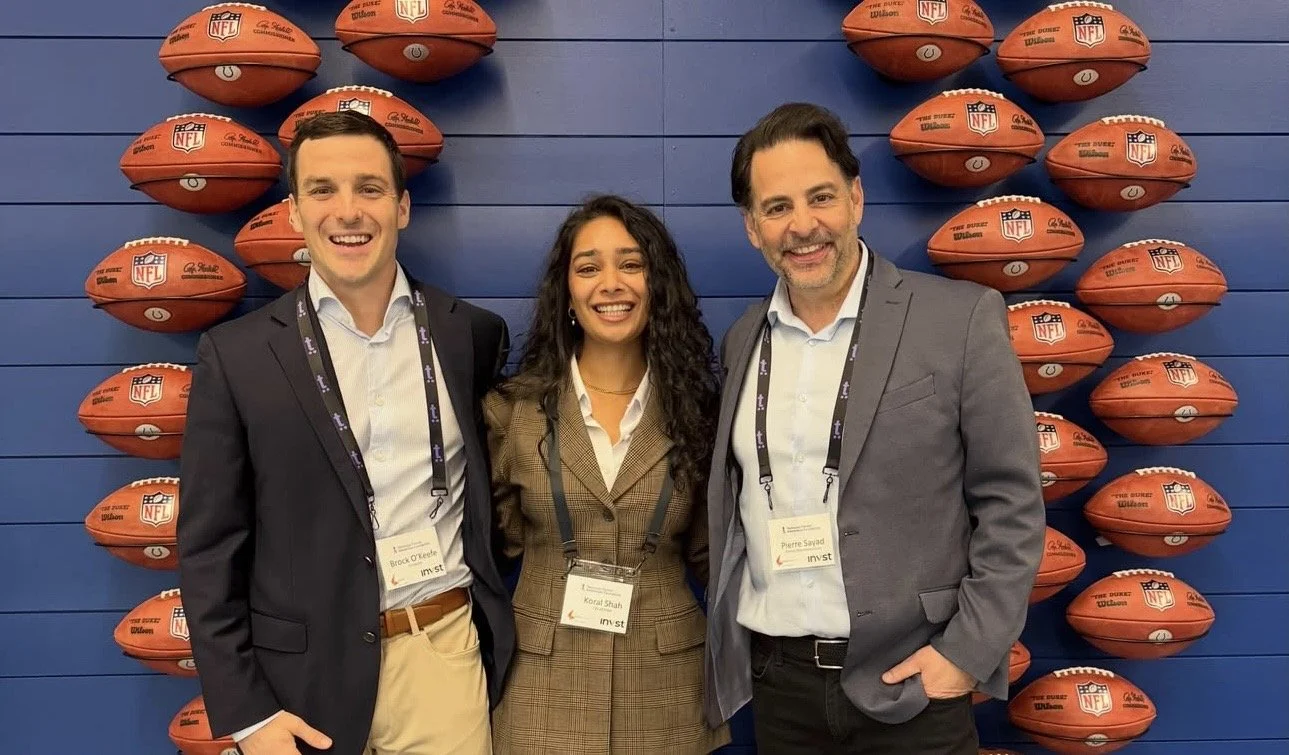
In partnership with Fennec Pharmaceuticals, the Testicular Cancer Awareness Foundation welcomed physicians, audiologists, and other leaders in the testicular cancer space to Indianapolis for the inaugural TCAF Indy 500 Educational Event. The day combined meaningful education around survivorship and hearing health with unique networking opportunities surrounding Fast Friday at the Indianapolis Motor Speedway.
Dylan began treatment for a non-seminoma germ cell tumor with EP chemotherapy, but midway through, his condition took a devastating turn. What started as standard cancer treatment escalated into severe complications, including sepsis and gangrene, leaving him hospitalized in critical condition. At one point, his family was called in to say goodbye.
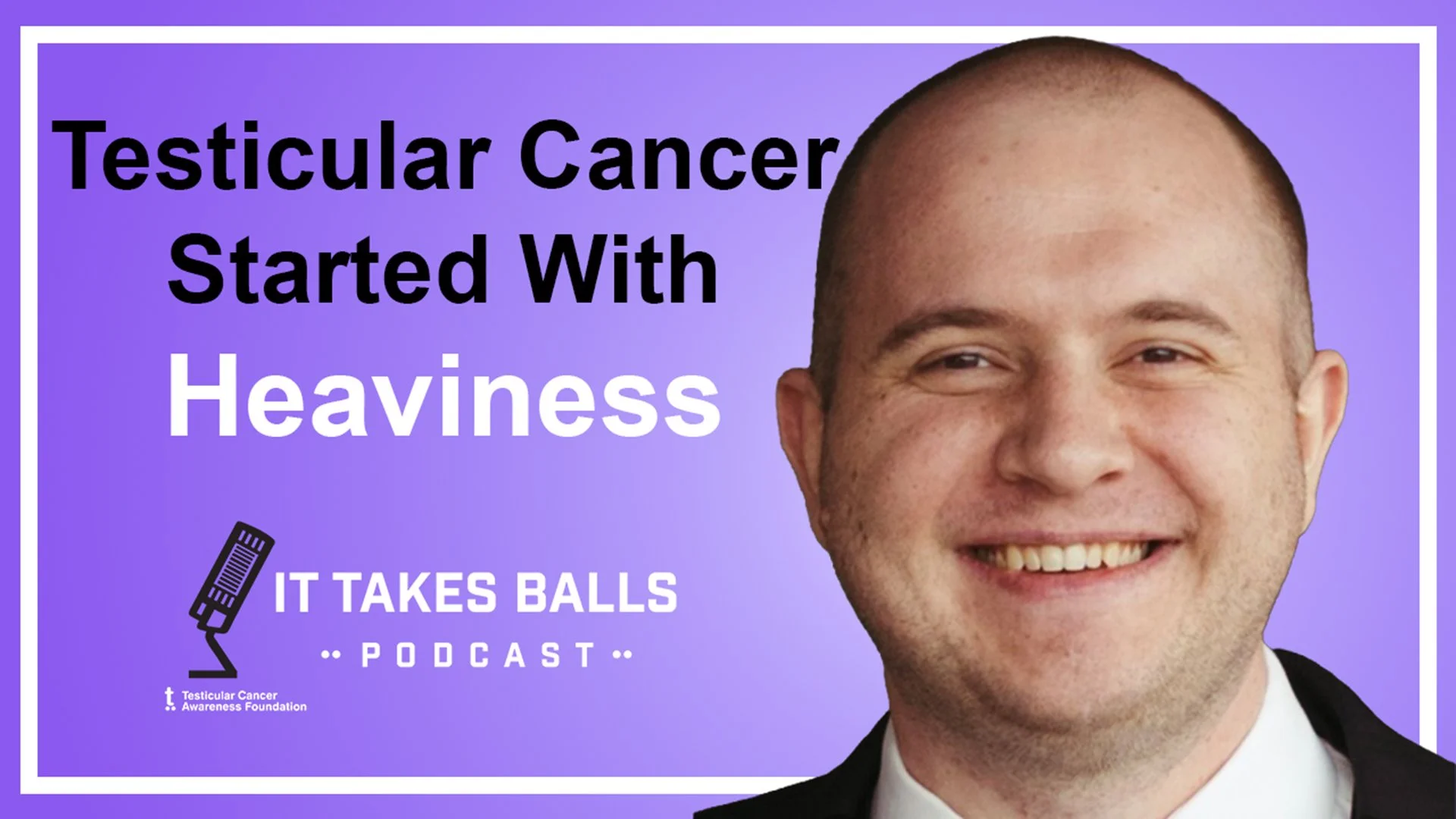
Luke opens up about the physical toll of treatment, including fatigue and side effects, as well as the mental challenges that came with such an unexpected turn. From scan anxiety to continuing therapy during treatment, he shares how he navigated both the data-driven decisions and the emotional weight of cancer.
Beyond the event itself, the episode reinforces the mission: raising awareness and promoting early detection. Listeners are reminded of the importance of monthly testicular self-exams, common symptoms, and how early diagnosis can lead to high cure rates, especially when detected early.
More than anything, this episode is about community and turning awareness into action to provide meaningful support to those affected by testicular cancer.
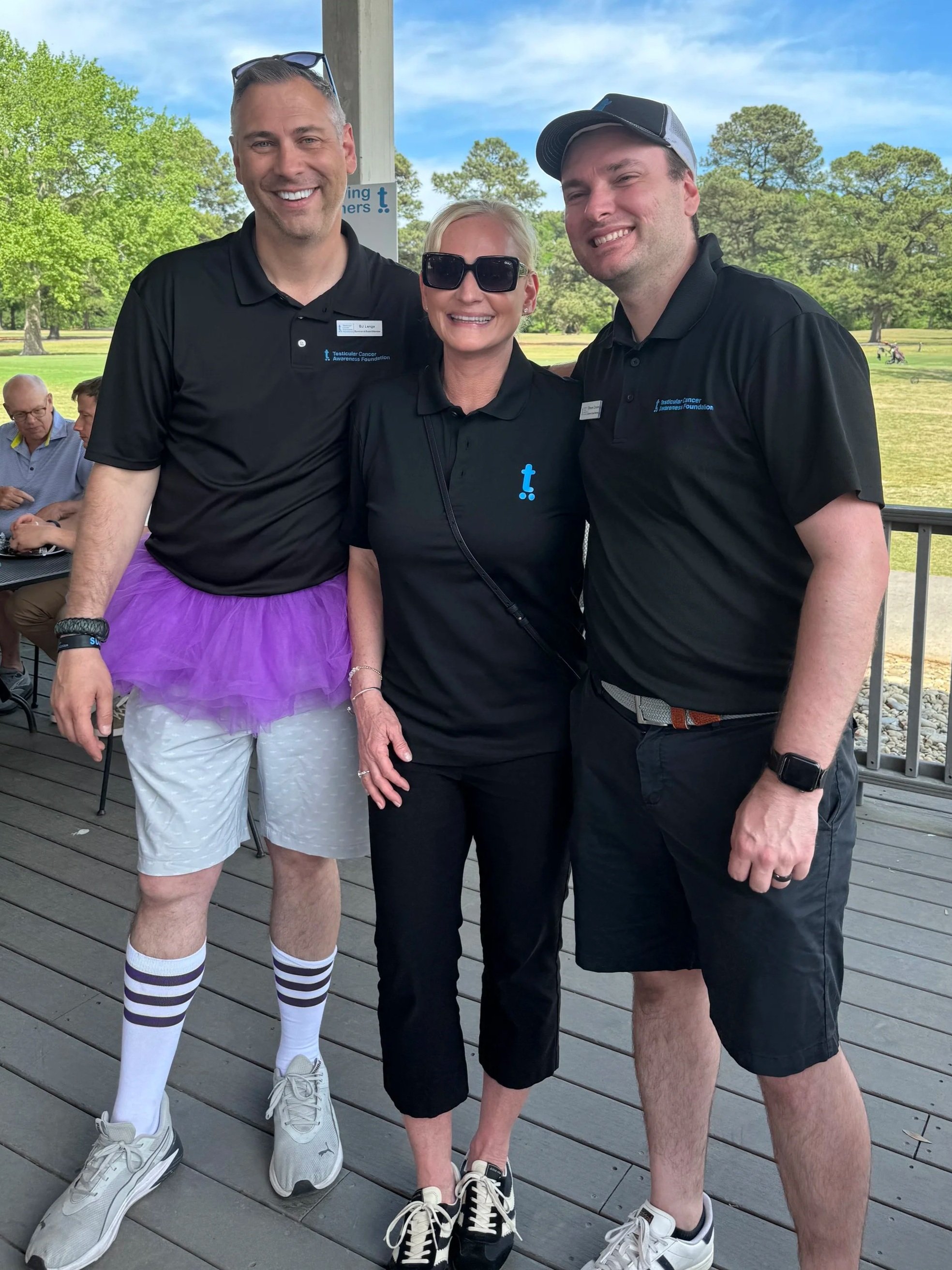
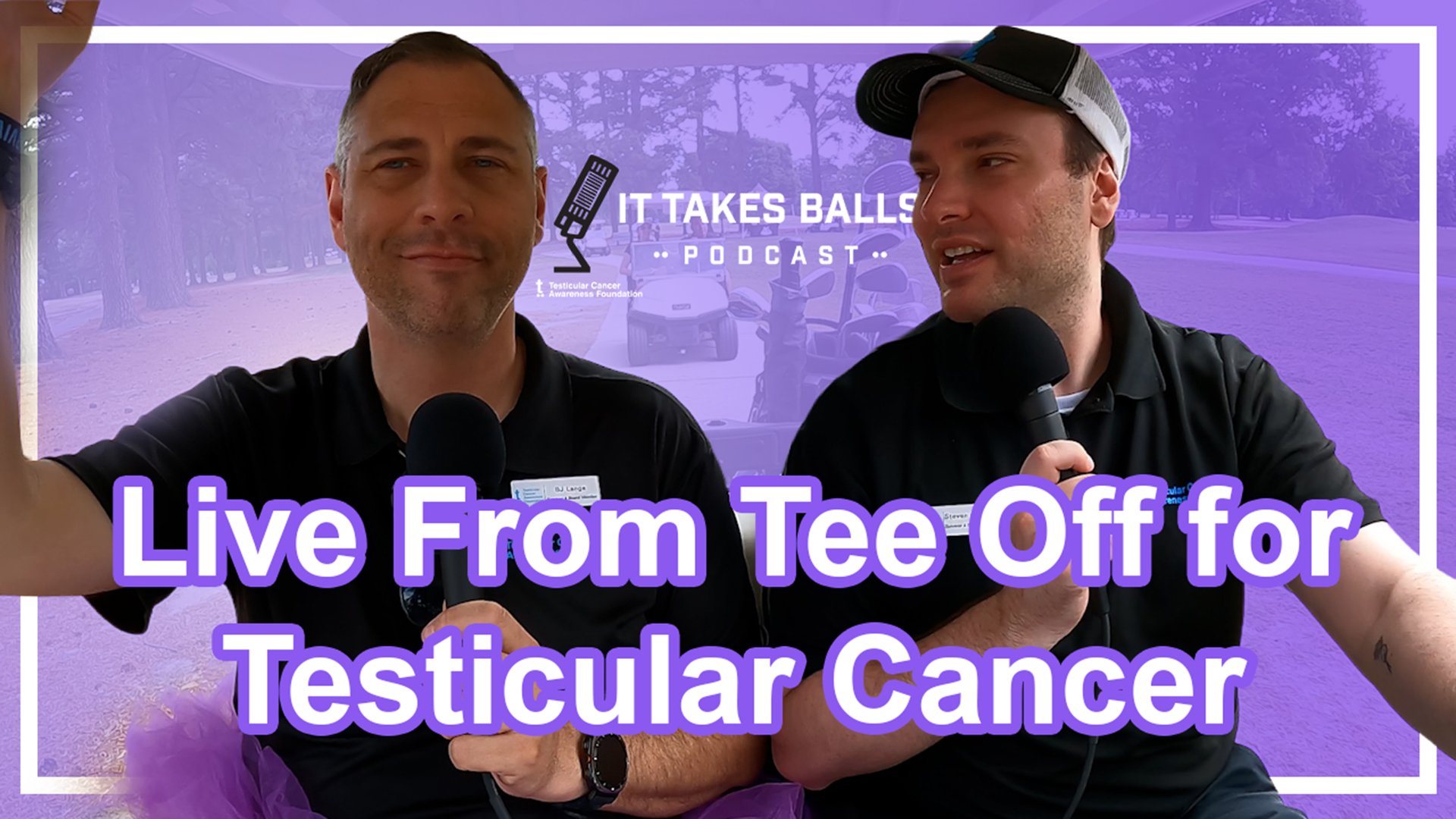
The second annual Tee Off for Testicular Cancer golf tournament in Norfolk raised nearly $40,000 in support of the Testicular Cancer Awareness Foundation. The event brought together survivors, families, and the local community to raise awareness, promote early detection, and support those impacted.
During Testicular Cancer Awareness Month, NADS Organic Underwear partnered with Testicular Cancer Awareness Foundation, to bring the “Check Your Nads” March to the streets of Austin. The bold six-mile march turned heads and brought survivors, supporters, and advocates together to raise awareness and start conversations.
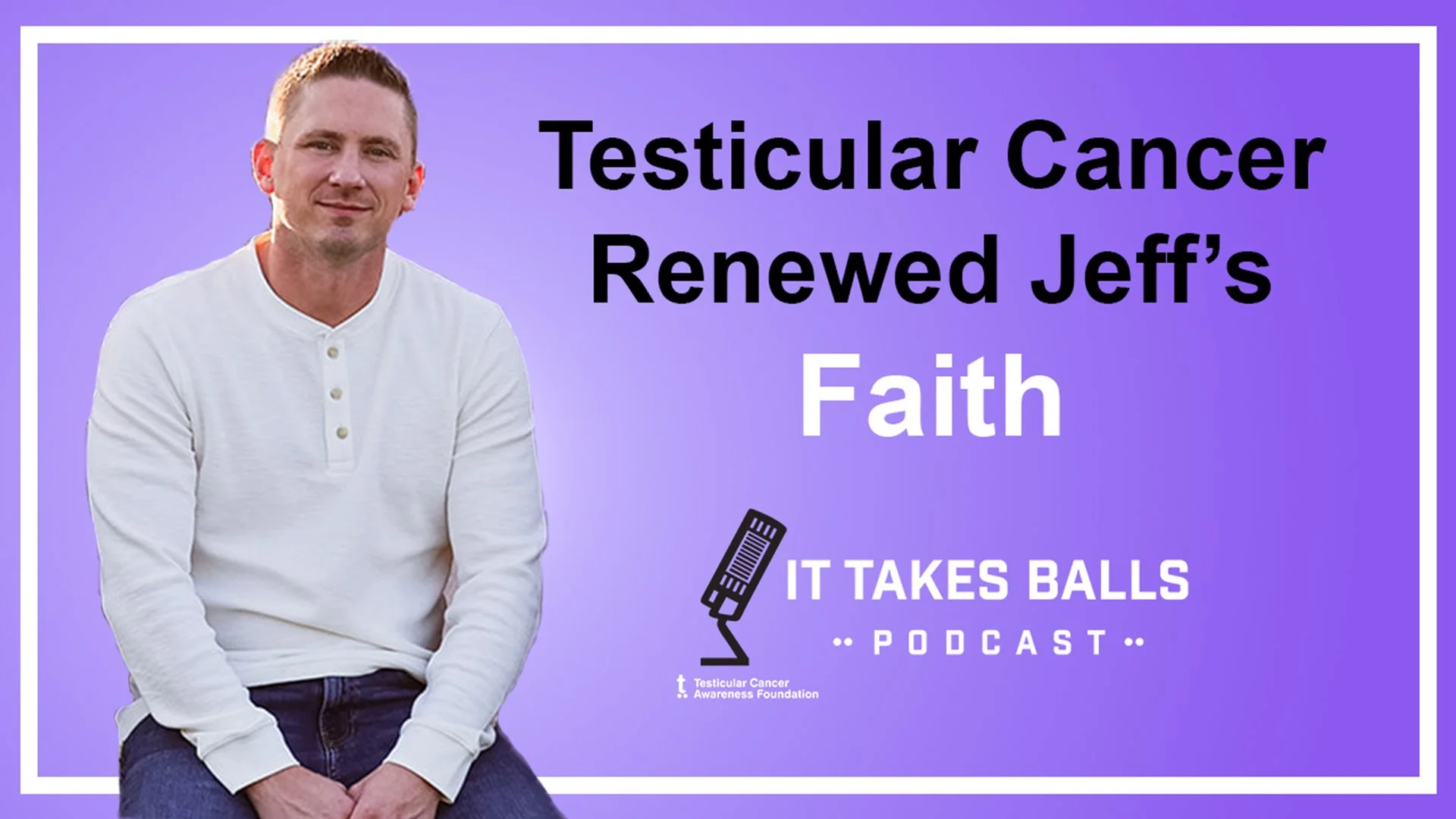
This episode highlights the importance of recognizing testicular cancer symptoms, advocating for your health, and understanding that survivorship is about more than just treatment—it’s about rebuilding physically, mentally, and spiritually.
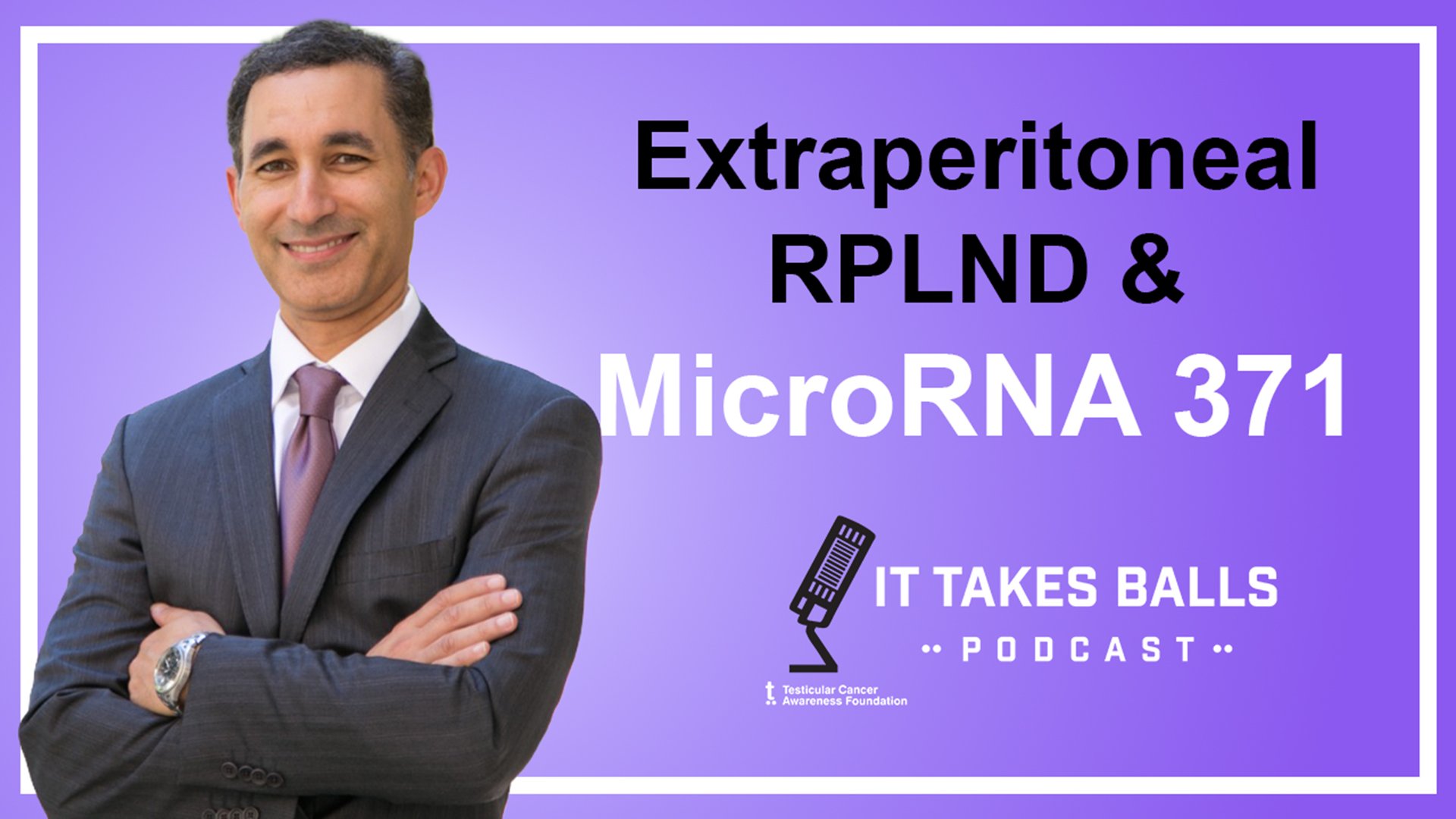
Beyond treatment, this episode explores the importance of being treated at high-volume centers, avoiding overtreatment, and understanding the long-term effects of both surgery and chemotherapy. Dr. Daneshmand also discusses the status and future of MicroRNA 371 biomarker testing.
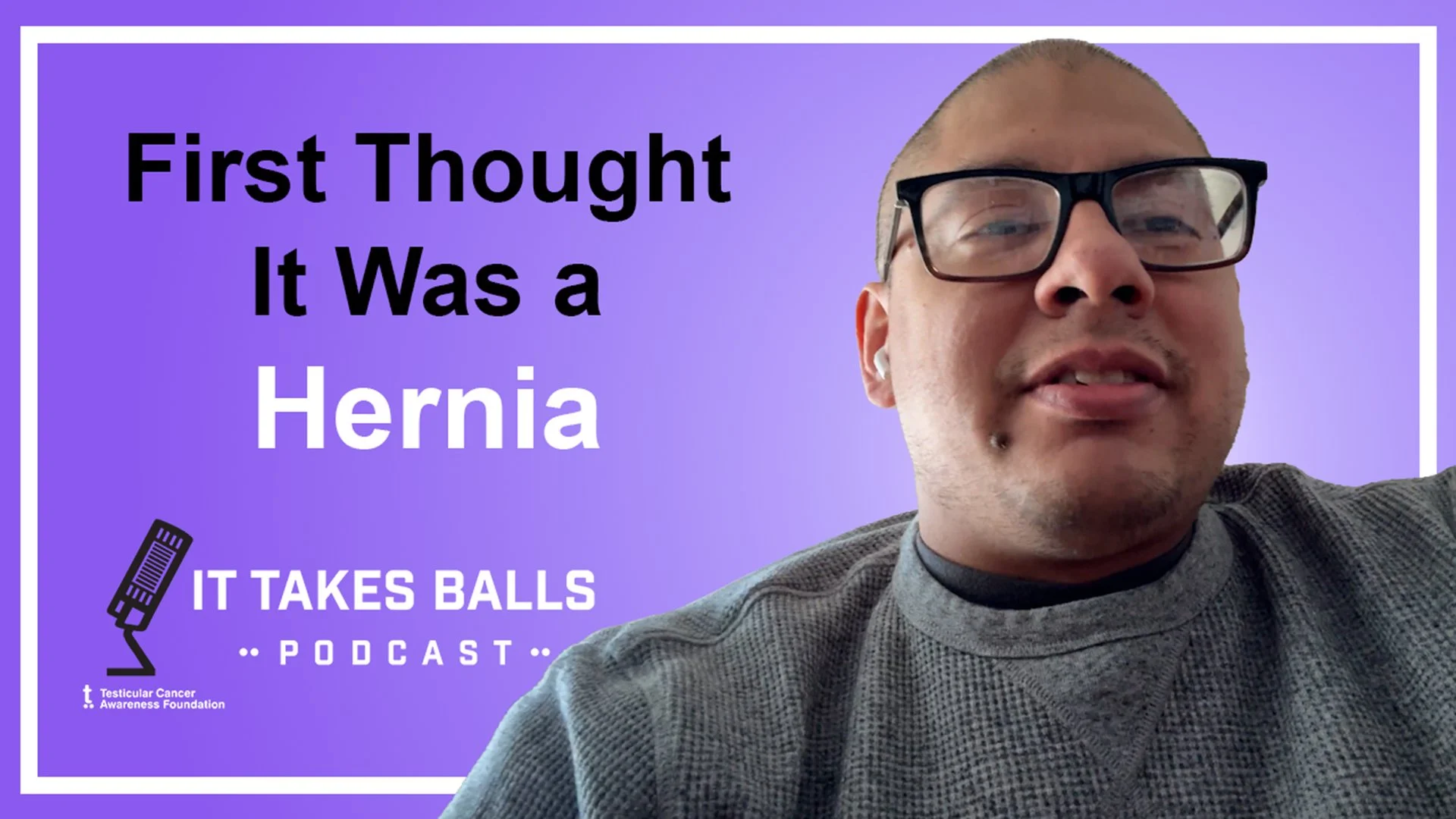
Osvaldo walks through the shock of hearing “you have cancer,” undergoing an orchiectomy, and waking up to learn that the his testicle had been completely removed. He candidly describes the emotional reality of losing a testicle, the confusion around what doctors were removing, and the relief of finally being free from the constant pain after surgery. His story is an important reminder that testicular cancer symptoms can include a lump, swelling, heaviness, and persistent back pain — and that early detection can save your life.
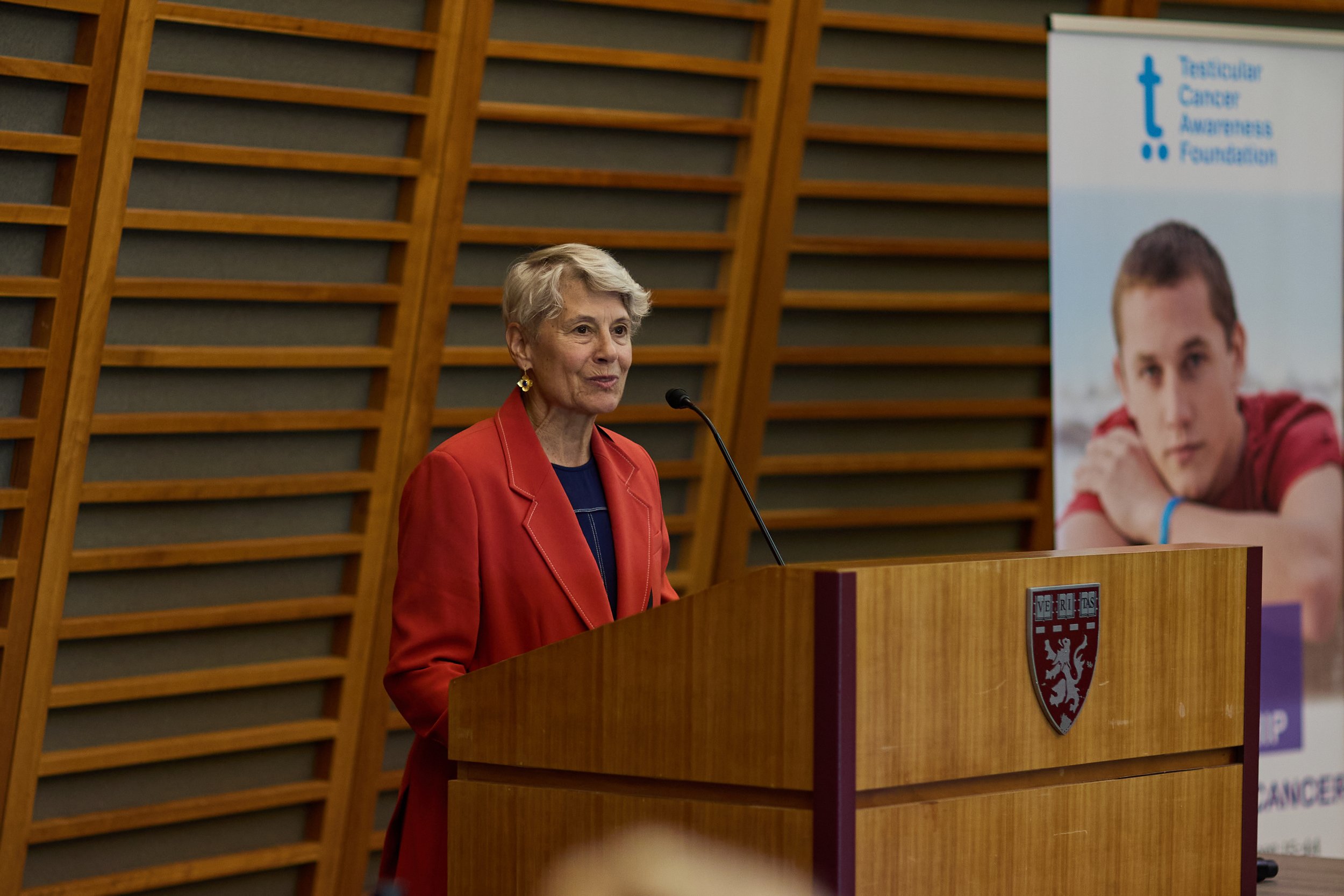
At the 2025 Testicular Cancer Conference, Dr. Lindsay Frazier discussed how international collaboration is accelerating research for testicular cancer and other germ cell tumors through the Malignant Germ Cell Tumor International Consortium (MaGIC).
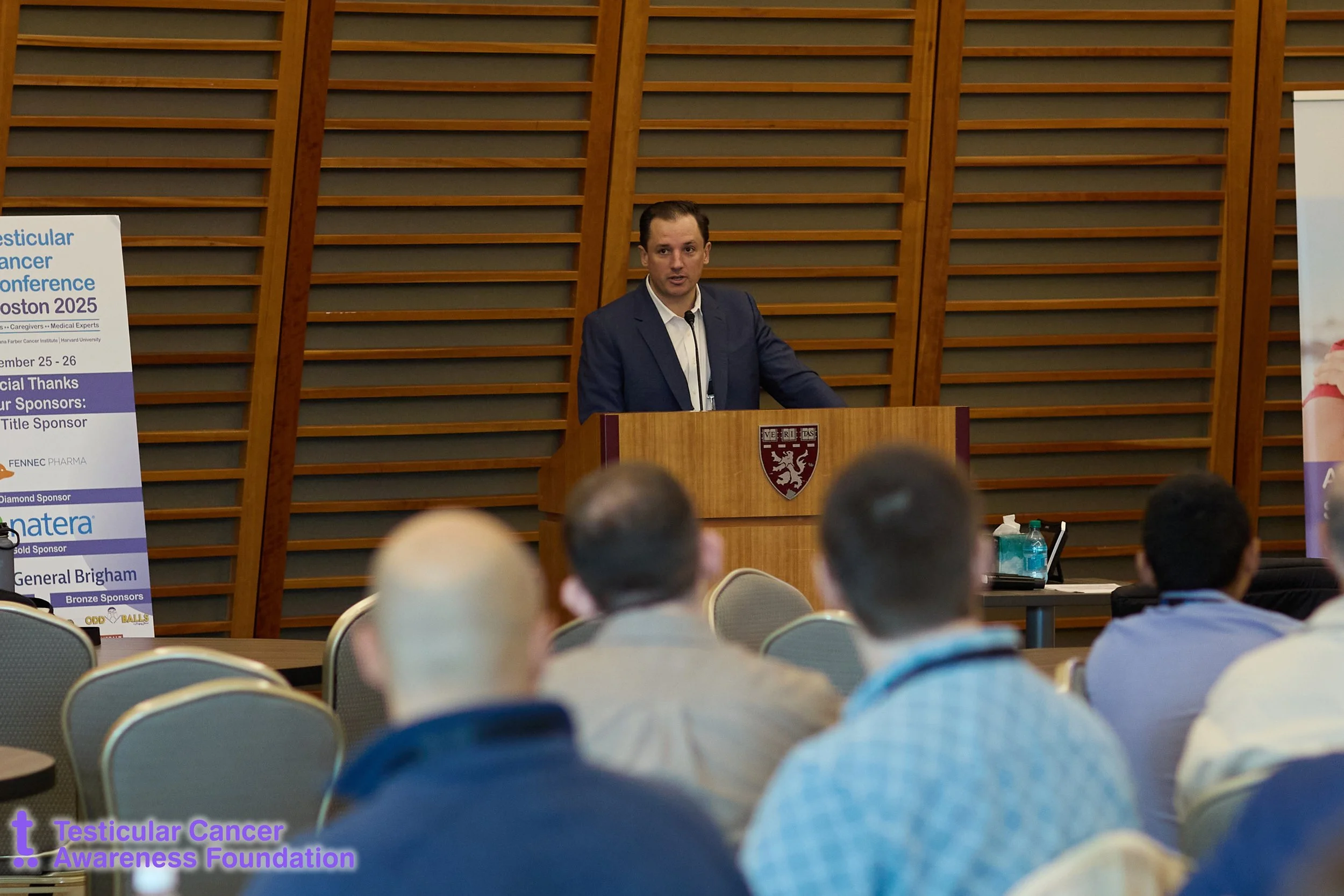
Dr. Feldman began by reflecting on the history of testicular cancer treatment and the dramatic shift brought about by cisplatin-based chemotherapy. Key takeaways included:
Before cisplatin, metastatic testicular cancer was often fatal, with most patients not surviving
The introduction of cisplatin is considered one of the greatest medical advances of the 20th century
Survival rates for metastatic disease improved from roughly 20% to nearly 80%
While highly effective, cisplatin is associated with significant short- and long-term side effects, making toxicity reduction an ongoing priority
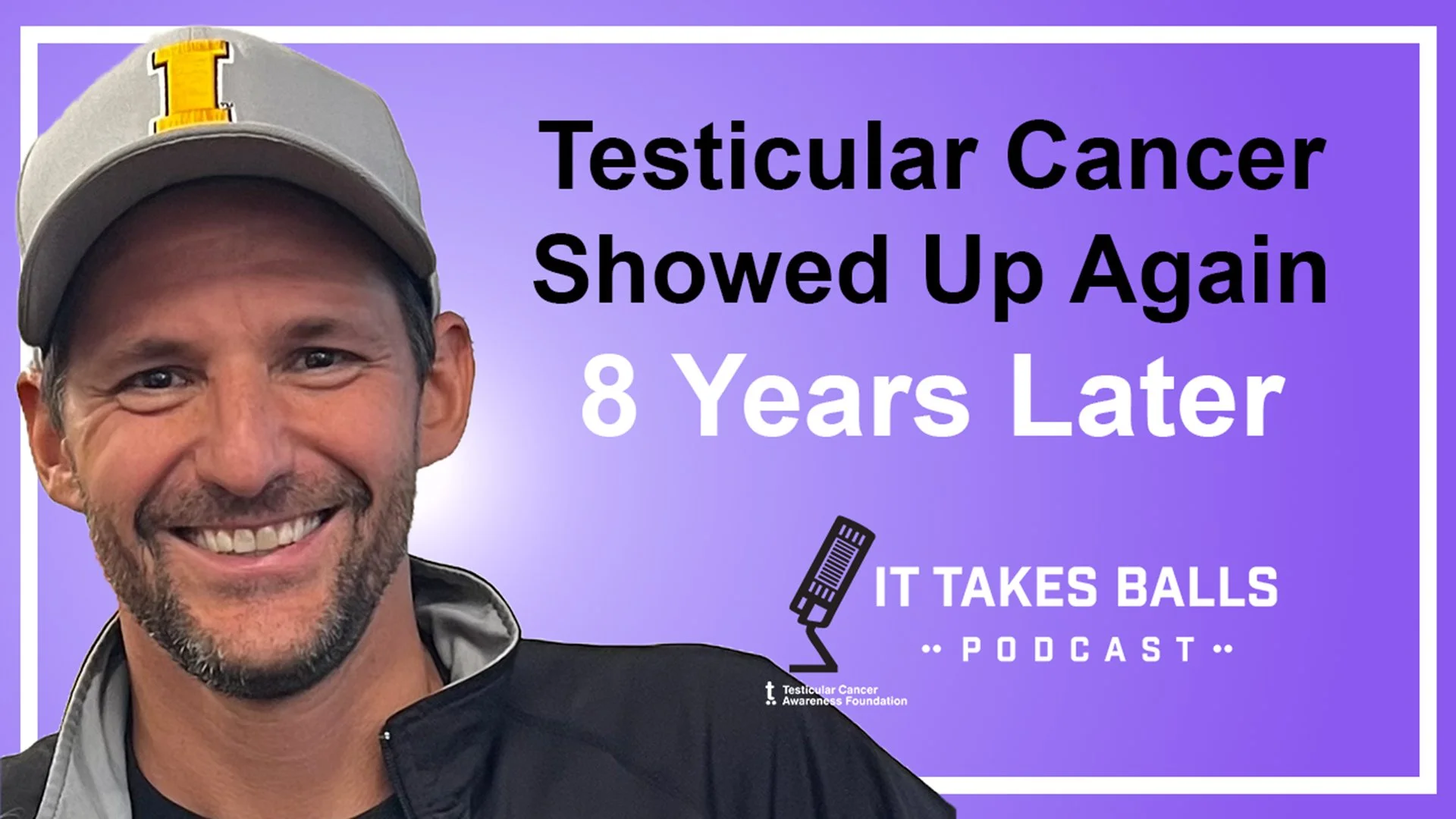
Whether you’re navigating a testicular cancer diagnosis, supporting someone going through treatment, or simply learning more about testicular cancer symptoms, recurrence, and survivorship, Greg’s story is a powerful reminder that early detection matters—and that strength often shows up in the determination to keep fighting, even when the battle returns.
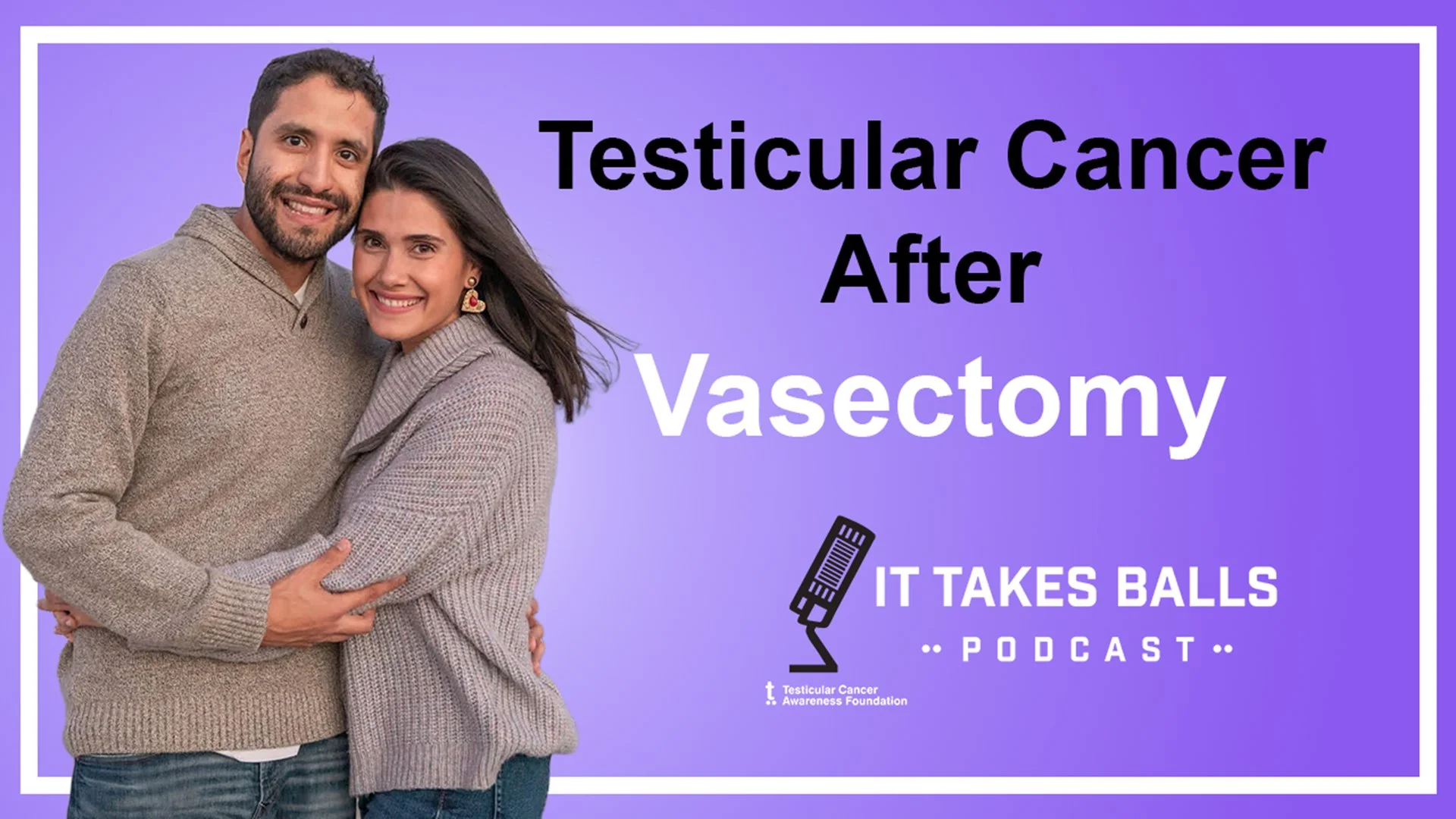
In this episode of It Takes Balls, Eduardo Celis, a Venezuelan-American, shares his journey through testicular cancer at age 35, a diagnosis that can feel especially unexpected for men who consider themselves healthy and in their prime. Eduardo opens up about noticing changes after a vasectomy, navigating the uncertainty of symptoms, and ultimately hearing the words no one expects.
During the 2026 ASCO Genitourinary Cancers Symposium, the Testicular Cancer Awareness Foundation hosted 55 physicians and researchers at Marianne’s speakeasy in San Francisco for a Meet & Greet Social sponsored by Fennec Pharmaceuticals.
Justin underwent four rounds of VIP chemotherapy (cisplatin, etoposide, and ifosfamide), administered inpatient 24 hours a day for a week at a time. He openly discusses the brutal side effects of chemo, including severe pain, tinnitus from cisplatin, dangerously low platelet counts, and the emotional toll of living in the oncology ward. After chemo reduced the tumor to a dead mass, he endured an 8.5-hour open chest surgery, losing two-thirds of his right lung, part of his heart wall, and major veins that had to be reconstructed.
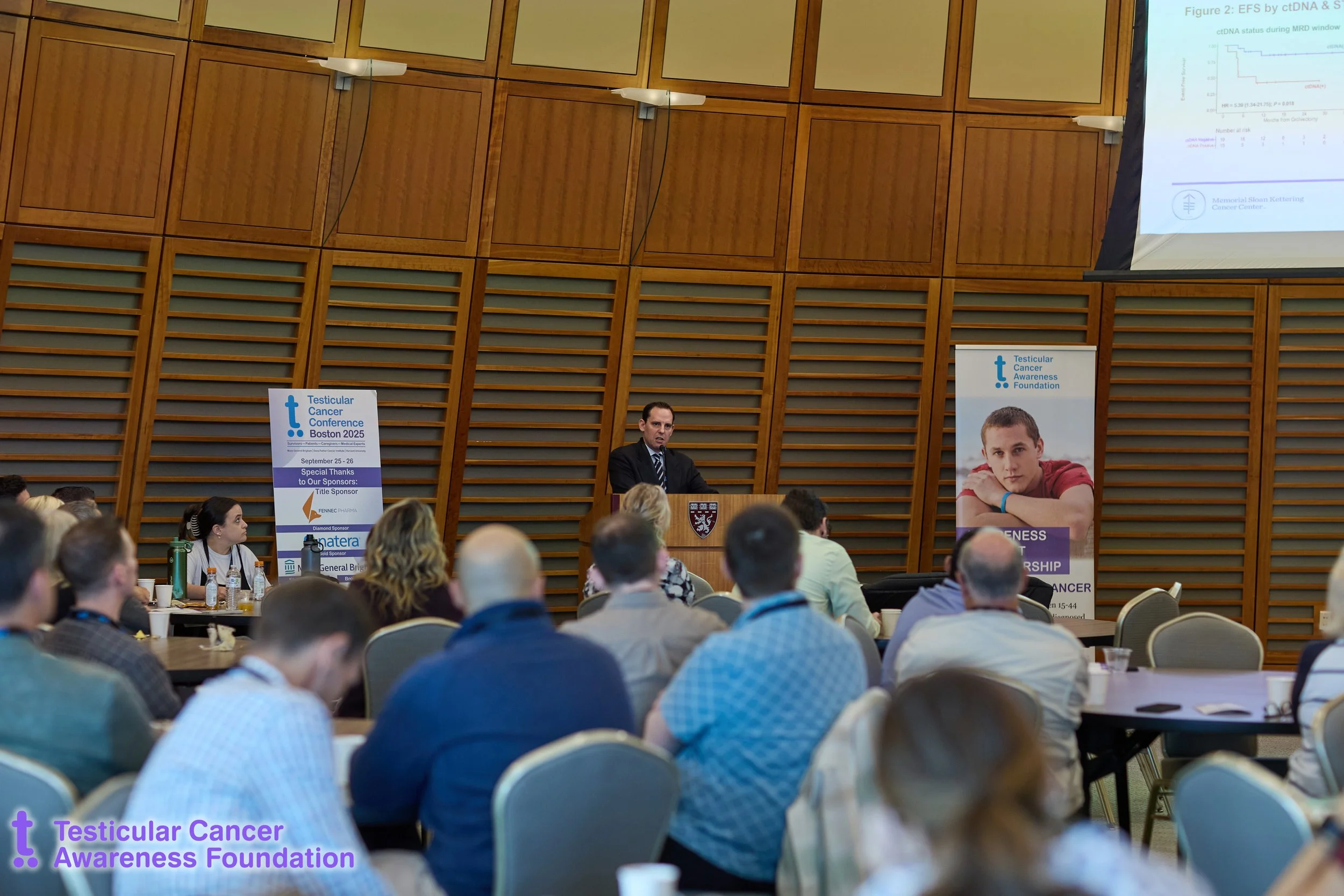
Dr. Feldman began by reflecting on the history of testicular cancer treatment and the dramatic shift brought about by cisplatin-based chemotherapy. Key takeaways included:
Before cisplatin, metastatic testicular cancer was often fatal, with most patients not surviving
The introduction of cisplatin is considered one of the greatest medical advances of the 20th century
Survival rates for metastatic disease improved from roughly 20% to nearly 80%
While highly effective, cisplatin is associated with significant short- and long-term side effects, making toxicity reduction an ongoing priority
The discussion explores the differences between BEP, EP, VIP, and TIP chemotherapy regimens, including when and why each is used, how doctors balance cure rates with toxicity, and why lung health, kidney function, age, and patient goals matter when choosing treatment. Dr. Feldman also explains why cisplatin remains superior to carboplatin in advanced germ cell tumors, when surveillance is preferred over treatment in stage 1 disease, and how overtreatment can carry long-term risks.
Brian then speaks on the physical and mental toll of treatment, including the realities of chemotherapy side effects, trauma-related memory gaps, hearing loss, and long-term survivorship challenges. Brian opens up about navigating work, marriage, and mental health during treatment, as well as the shock of discovering a second testicular cancer diagnosis years later — this time during a period of major life upheaval that included separation, a new job, and relocation.
In partnership with Fennec Pharmaceuticals, the Testicular Cancer Awareness Foundation welcomed physicians, audiologists, and other leaders in the testicular cancer space to Indianapolis for the inaugural TCAF Indy 500 Educational Event. The day combined meaningful education around survivorship and hearing health with unique networking opportunities surrounding Fast Friday at the Indianapolis Motor Speedway.